Patek Philippe is called the true king among famous Swiss brands, a status supported by its unique manufacturing process, exceptional models, and nearly 200 years of history. But most importantly, in today’s world—where everything is increasingly unified for mass production—the most expensive Patek Philippe watches remain at the very top of exclusivity, which is why they are so desirable and in demand. Throughout its history, the brand has been not only a trendsetter but also a genuine contributor to the development of watchmaking. Proof of this can be found in the brand’s historical achievements:
1868 — release of the first wristwatch;
1881–1902 — patents for a precision rate regulator, a perpetual calendar mechanism, and a split chronograph;
1923 — the first watch with a split-seconds chronograph;
1925 — the first watch with a perpetual calendar;
1953 — the creation of the Caliber 12-600 AT with automatic winding;
1956 — the brand’s first electronic watch;
1962 — a movement with a tourbillon;
1996 — a patent for the annual calendar mechanism;
2006–2008 — silicon balance spring and silicon escapement wheel.
However, innovation is not the brand’s only trump card. Today, the most expensive Patek Philippe watches have become a prestigious symbol of success. They not only possess significant investment potential. In accordance with the brand’s philosophy, Patek Philippe watches are created not only for the person who buys them, but also for their descendants, as they do not lose value and are passed down through generations.
Why Patek Philippe watches are so expensive
First and foremost, the Patek Philippe brand represents horological luxury, which historically belonged mainly to royalty, presidents, and the highest elite. These accessories featured not only perfect aesthetics but also precisely engineered mechanisms. However, they were not the only ones in the watch industry capable of achieving such characteristics. So why have Patek Philippe watches—among all luxury timepieces—become the ultimate symbol of extraordinary value?
Innovation and complex watch mechanisms
A defining feature of Patek Philippe watches—many of which have already become museum-grade rarities—is the presence of advanced complications such as perpetual calendars, tourbillons, World Time models, and minute repeaters. The latter, for example, are modules that strike the time every quarter hour and are quite common in premium watches. However, in the case of Patek Philippe models, this complication represents a unique distinction that is highly valued by brand enthusiasts and collectors. The time is struck by small steel hammers in different registers: high-pitched for minutes, low-pitched for hours, and dual-tone for quarter hours.
Premium-class materials
Since the transfer of company management to the Stern family in the 1930s, the brand’s collections have been distinguished by a careful preservation of the professional skills of the master watchmakers of the renowned Swiss manufacture. All of these skills are meticulously applied in modern models, just as they are in original examples of the most expensive Patek Philippe watches. Thanks to tradition combined with innovation, the company creates true masterpieces in gold and platinum, featuring geometric engraving, marquetry mosaics, guilloché decoration, and gemstone settings—works that have no equal in high watchmaking.
Exclusive production
The manufacture remains faithful to its long-standing marketing tradition. Patek Philippe products are distinguished by exclusivity, as the brand continues to produce only around 200 grand complication watches per year. Despite the tremendous demand for new Patek Philippe models—many of which command very high prices—the company has no intention of lowering its standards. Each model is a genuine work of horological art, characterized by engineering ingenuity, sometimes quite bold, an incredible level of detail, and impeccable finishing.
Hand assembly and craftsmanship
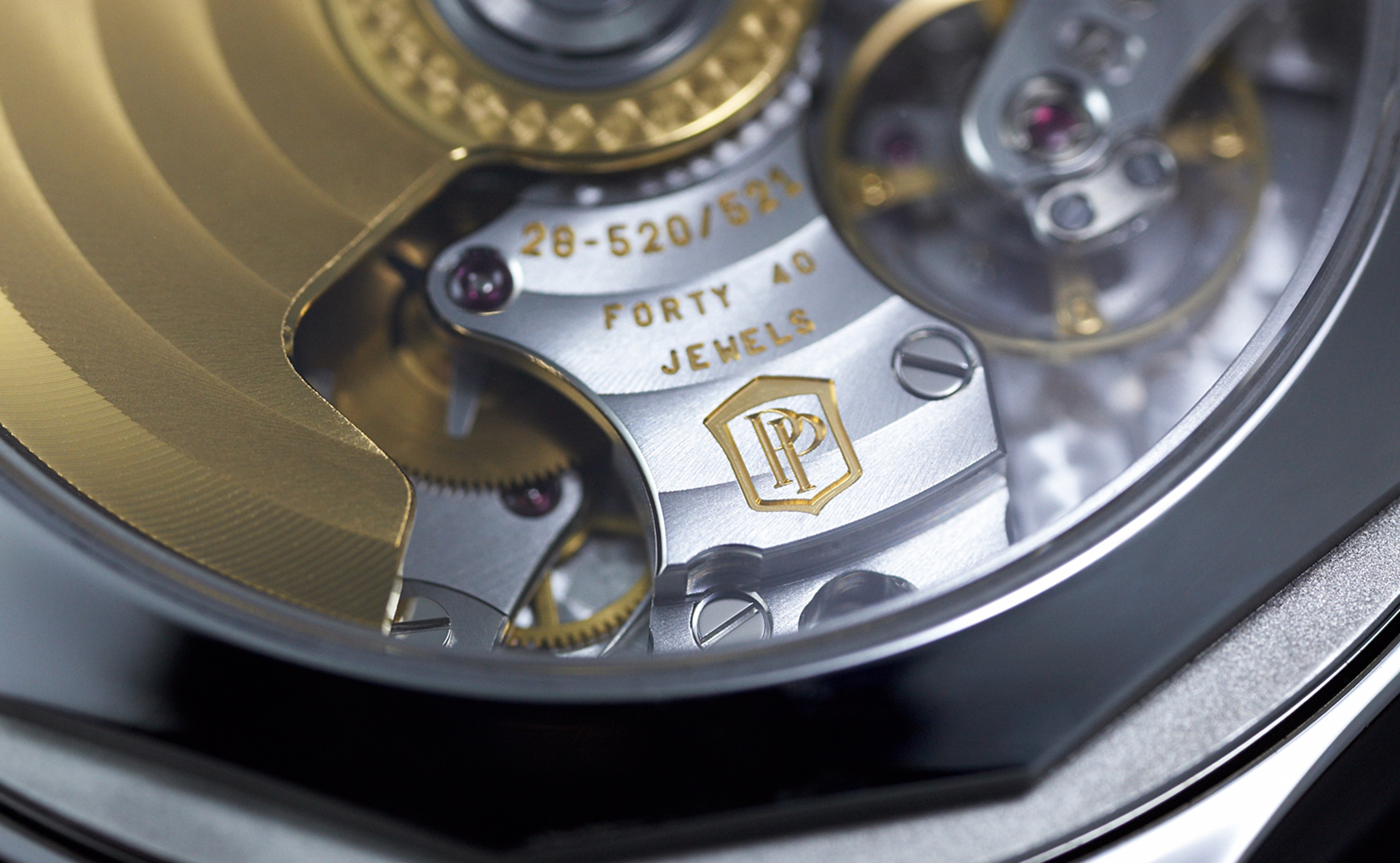
The installation of numerals and markers, finishing of the dial and case, decoration of every internal mechanism, indications of dual and world time, and all technical complications—every detail and assembly operation of the most expensive Patek Philippe watches is performed by hand by skilled artisans. More than 20 specialists may work on a single piece. Machines are used only for creating blanks, which are then refined to perfection entirely by hand. This is the core value of the brand, ensuring the longevity and exceptional accuracy of Patek Philippe timepieces.
Investment value and prestige
Year after year, the most expensive Patek Philippe watches steadily increase in value, outperforming precious metals and gemstones in upward dynamics. Proof of this is the real boom at watch auctions, as investing in a Patek Philippe watch represents a substantial asset capable of providing financial security for you and your loved ones. In addition, it highlights your high status and success.
The most expensive Patek Philippe watches: top 5 models
Are the most expensive Patek Philippe watches worth the money paid for them today? One thing can be stated with certainty: market prices are determined primarily by supply and demand. At the same time, it should be taken into account that Patek Philippe is a special brand with a rich heritage and famous ambassadors. Therefore, we can confidently recommend acquiring these exquisite watches—only then will you fully appreciate the magic of the brand. This mystique is emphasized by the company’s symbol, the famous Spanish Calatrava cross.
Patek Philippe Perpetual Calendar
Experts consider these watches, equipped with a chronograph and a perpetual calendar, to be the perfect representation of Patek Philippe. While they debuted in a neutral, even slightly conservative style, they were later updated with bold designs featuring platinum cases in two color versions: set with red rubies or blue sapphires and matching dials.
The Patek Philippe Perpetual Calendar 5271P is already the fourth generation of the prototype version with a tachymeter bezel and a stepped periphery of the dial. The new version features a dial with a full “railroad” minute track and no tachymeter. The balanced and clean layout looks more modern, and the inscriptions are more contrasting, improving legibility.
Technical specifications of the model:
Case: 950 platinum, 58 baguette-cut rubies or sapphires, sapphire crystal and interchangeable caseback (sapphire and platinum), water resistance 30 m.
Dial: Lacquered red or blue, with a black gradient rim, applied gold markers and gold hands.
Movement: In-house caliber, manually wound chronograph, power reserve of 55–65 hours.
Functions: Perpetual calendar with date, day, month, leap year, day/night indicator, and moon phases.
This model is part of the Perpetual Calendar collection with an approximate value of $470,000.
Patek Philippe Grandmaster Chime Ref. 6300
The Grandmaster Chime 6300G-010 is one of four versions of the Grand Complications collection, inlaid with various precious stones. Crafted in white gold, the model is produced in two versions: one set with 409 baguette-cut diamonds and 118 blue sapphires on the bezel, and another with 291 baguette-cut diamonds. As usual, the watches are produced in limited numbers and represent the pinnacle of watchmaking craftsmanship, featuring 20 complications and five chiming modes on three gongs.
Key parameters:
Case: Double-sided, 49.4 mm in diameter, with a patented rotating mechanism.
Dial: White gold plates decorated with black matte wood. The upper dial features gold Breguet numerals and a hand-guilloché Clous de Paris pattern. The second dial displays hours, date, month, day of the week, leap year cycle, and a central aperture for the year.
Movement: Manual winding, consisting of 1,366 components, with 20 complications and five acoustic functions: grande sonnerie, petite sonnerie, minute repeater, alarm, and date repeater.
Functions: Perpetual calendar with a four-digit year display, second time zone, day/night indicator for the second time zone, moon phases, indication of crown position, and more.
The folding clasp with the Calatrava cross is set with diamonds or blue sapphires. As of 2025, market prices start from $3.8 million.
Caliber 89 Grand Complication
This pocket watch is one of the most complex creations of the manufacture, presented in 1989. It took nearly nine years to realize all 33 complications within a four-level movement. The technical features include:
perpetual calendar, sunrise and sunset display, sidereal time;
repeater with Westminster chimes, grande and petite sonnerie, and alarm;
thermometer and a two-minute tourbillon.
The case is made of titanium, though four additional versions exist in white, yellow, and rose gold, as well as platinum. The movement contains 1,728 hand-made components and 126 jewels. The watch is so extraordinary that experts recommend keeping it in a safe. A yellow-gold version was sold at the Antiquorum auction in 2009 for $5 million.
Patek Philippe World Time 5531R-012
The Patek Philippe World Time is crafted in rose gold with an enamel dial depicting the Lavaux landscape, executed in the cloisonné Grand Feu technique. White gold hands are used, with a skeletonized “Southern Cross” motif for the hour hand and a diamond-shaped motif for the minute hand. The case and clasp are guilloché-decorated with the Clous de Paris pattern. The hallmark of the model is its 12 complications, including a 24-hour time indication, a minute repeater on two classic gongs, and a world time function.
Each piece (no more than ten are produced annually) is perceived on the watch market as a work of art. The sapphire crystal caseback reveals the self-winding movement with an original patented construction. Even modest water resistance and a 48-hour power reserve do not reduce the value of this masterpiece. The official price is around $330,000, but at auctions in 2025, due to the uniqueness of the enamel, prices range from $1.1 to $1.6 million.
Patek Philippe Nautilus Ref. 5711 with turquoise dial
The defining feature of this model is the famous Tiffany Blue dial of the iconic jewelry house. Only 170 pieces were produced to commemorate 170 years of cooperation between the legendary watch brand and the equally luxurious jewelry house. In addition to the Patek Philippe name, the dial features the Tiffany & Co. signature, which is highly valued by collectors. A commemorative inscription is also applied to the sapphire caseback.
On the turquoise dial, markers and hands are rendered in contrasting black, and the date window is framed in metal. The initial retail price rose from $52,635 to $1.4–1.5 million. Despite this price level, Tiffany & Co.–signed watches are available only to loyal collectors. According to experts, these models possess a special magic, as each contains a hidden “secret” from the software development company—so-called Easter eggs.
How to identify an original Patek Philippe
Original Patek Philippe watches are distinguished by impeccable quality, sharp inscriptions, hand engraving, and the smooth movement of the seconds hand. High-level craftsmen also produce counterfeits, and their work can appear quite convincing.
Experts recommend paying attention to the following details:
quality of case finishing;
engraving;
movement;
hands;
bracelet or strap;
serial number. A counterfeit may copy the serial number of an original. Therefore, documentation alone does not guarantee authenticity;
price. If an original Patek Philippe costs €20,000 on the Chrono 10:10 website and you are offered the same model for €5,000–8,000, it is a fake. Patek Philippe watches hardly ever depreciate.
As we can see, there are many parameters by which an original can be distinguished from a fake, and not every potential buyer can verify them independently. Therefore, before making such an important purchase, it is strongly recommended to consult a professional watchmaker for authentication.
It is often believed that an original can only be purchased in Switzerland. However, official distributors of this manufacture also operate in Ukraine, such as Chrono 10:10. Here, original watches can be purchased with a certificate of authenticity and an international warranty.