07 October 2026
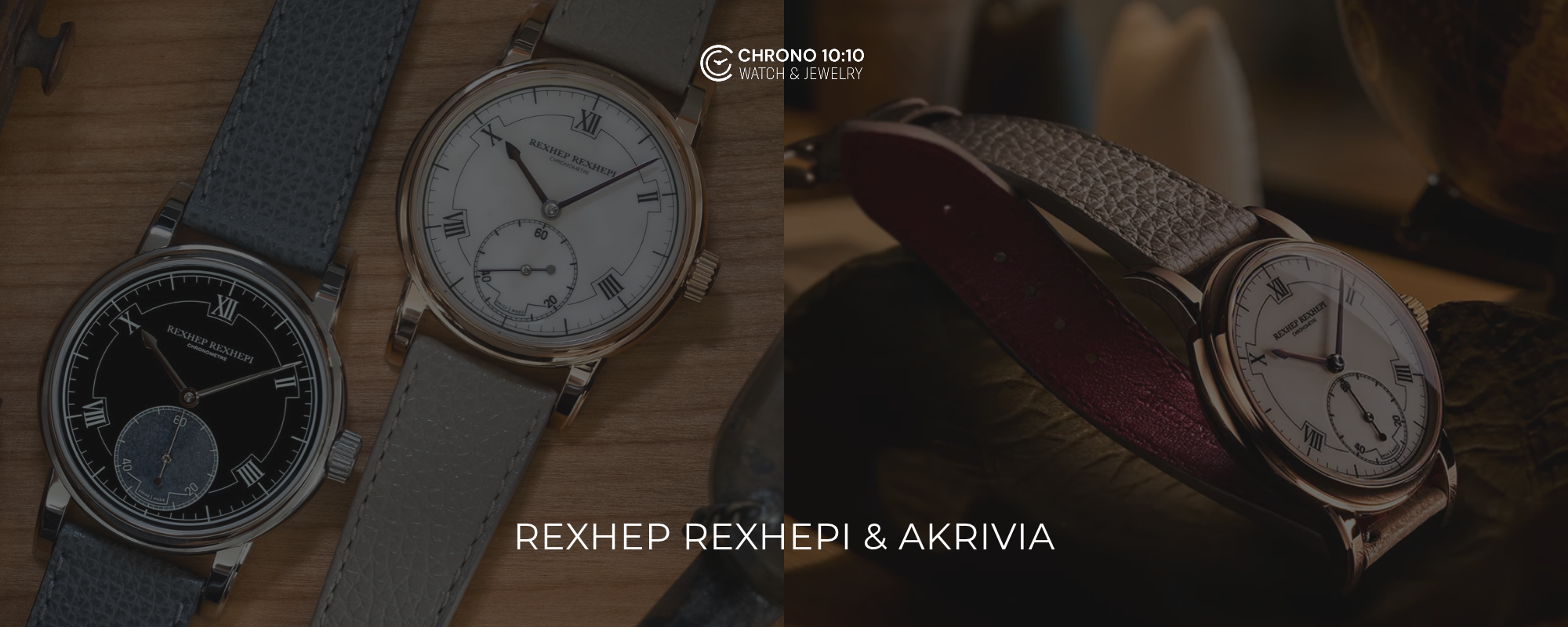
Rexhep Rexhepi and Akrivia: A Story of Craftsmanship and Auction Records


Mechanical watches are a marvel of engineering in which the power source is a spring. For some time, men preferred pocket mechanical timepieces, considering them more accurate. Wrist accessories appeared for the sake of ladies, when watches became a more refined luxury item. However, the course of history and technical progress also influenced the change in attitude toward the established design, when truly masculine activities and hobbies made it inconvenient to carry a watch in the pockets of men’s waistcoats. Thus, from the end of the 19th century, watches “moved” to the wrist, and engineering solutions along with unrivaled décor embodied by skilled watchmakers turned these accessories into a symbol of success and high social status
It is believed that the first self-winding watch appeared in 1770 thanks to Swiss watchmaker Abraham-Louis Perrelet. But according to some historical sources, the primacy belongs to Hubert Sarton (Hubert Sarton). This technology began to be used in wrist timepieces at the beginning of the 20th century. The first to patent a wristwatch with automatic winding was the English watchmaker John Harwood. The special feature of automatic accessories was that they use the energy of wrist movement and store it in the mainspring, which in turn drives the weighted rotor. But automatic winding became the standard for wristwatches much later — only by the 1960s
The operation of the automatic mechanism is based on the interaction of the main parts:
When worn constantly, such watches do not require manual winding, and the smooth movement of the hands adds status and individuality. In addition, their design is no less refined than that of ordinary mechanical watches. The average power reserve of original Swiss automatic watches is up to 40 hours or more
Any brand of such watches has delicate and sensitive mechanisms. That is why it is so important to initially follow the instructions for the first winding of the accessory, as well as the rules for wearing and servicing it. Basic recommendations for beginners:
At the same time, experienced enthusiasts of automatic watches advise trying not to wind them manually at all in the future, provided that you wear the accessory at least 8–10 hours a day — they will not stop. If the watch still stops or starts running slow, does not respond to shaking movements of the hand, it is time for a preventive inspection. But keep in mind that some models do not like being wound manually too often and may even break sometimes. Therefore, once again, we strongly recommend that immediately after purchase you read the instructions or consult the professionals at Chrono 10:10
We recommend caring for automatic watches by following these rules:
But even if you strictly follow all the recommendations, once every 2–3 years visit our service center for inspection and cleaning. This is especially important in cases where moisture appears under the crystal above the dial, timekeeping accuracy changes sharply (± 10–15 seconds per day), the crown turns with difficulty, or an unusual noise is heard inside the watch
Winding the watch once a month is considered optimal, but if it is not used for a long time, the lubricant inside may thicken and a watchmaker’s help may be needed. It is better to store this accessory in a special box — a winder, or time mover (rotomat). The operating principle of a winder is simple: place the watch on a special cushion and select the rotor mode. That’s all — the box will turn on and off at the right time, meaning the watch will receive energy artificially, without your participation. The device imitates the movement of the hand, the watch keeps running, and at any moment you can take it out of the winder and put it on your wrist without worrying about settings
More complex and expensive models can be programmed: set the direction and frequency of rotation, adjust the number of turns, and even stop the rotor when the mainspring is fully wound
A winder not only ensures continuous winding of the spring in the watches placed in it, but also promotes even distribution of lubricant in the movement, which is necessary for the longevity of the accessory. Some box manufacturers add lighting or a motor protection system when the lid is opened — this helps the mechanism last longer
So, you have decided to buy an automatic watch. The advantages are obvious: the accuracy of such watches can compete with quartz, and daily motion is useful not only for the timepiece, but also for you
The main advantages of automatic watches:
However, some nuances characteristic of automatic watches cannot be overlooked: they are more sensitive to the external environment and impacts, therefore they are not suitable for people who lead an extreme lifestyle. A key feature: if they are not worn constantly, over time accuracy decreases and professional adjustment will be required. That is exactly what is available at Chrono 10:10. If you have any questions or doubts, you can always contact us. Our experts will suggest which model is right for you and help with purchase and servicing

15 years on the market

Own service center

2 years of official warranty

Verified authenticity