A watch is not only a timekeeping instrument from a renowned Swiss brand, but also an investment in an asset that can appreciate in value. Luxury timepieces emphasize the owner's social status, refined taste, and style, and are often associated with cherished memories. That is why it is essential to keep them looking and performing at their best. Moreover, a watch's proper functioning depends on correct storage and timely servicing, including cleaning, replacement of worn components, polishing, and other technical procedures. Proper and regular maintenance therefore plays a key role in ensuring both the longevity of the watch and its flawless appearance.
Simple Rules for Caring for Luxury Watches
Any mechanical wristwatch, especially a premium one, should be maintained according to long-established luxury watch servicing standards. The general recommendations are as follows:
- Avoid strong impacts — even the most robust cases and movements can be damaged. Remove your watch before engaging in physical work or sports activities.
- Avoid contact with water, especially if the watch is not water-resistant. If it has a specified level of water resistance, always follow the manufacturer's recommendations.
- Protect your watch from strong magnetic fields, as they can affect timekeeping accuracy.
- It is best to clean the case and bracelet (or strap) only after consulting a professional.
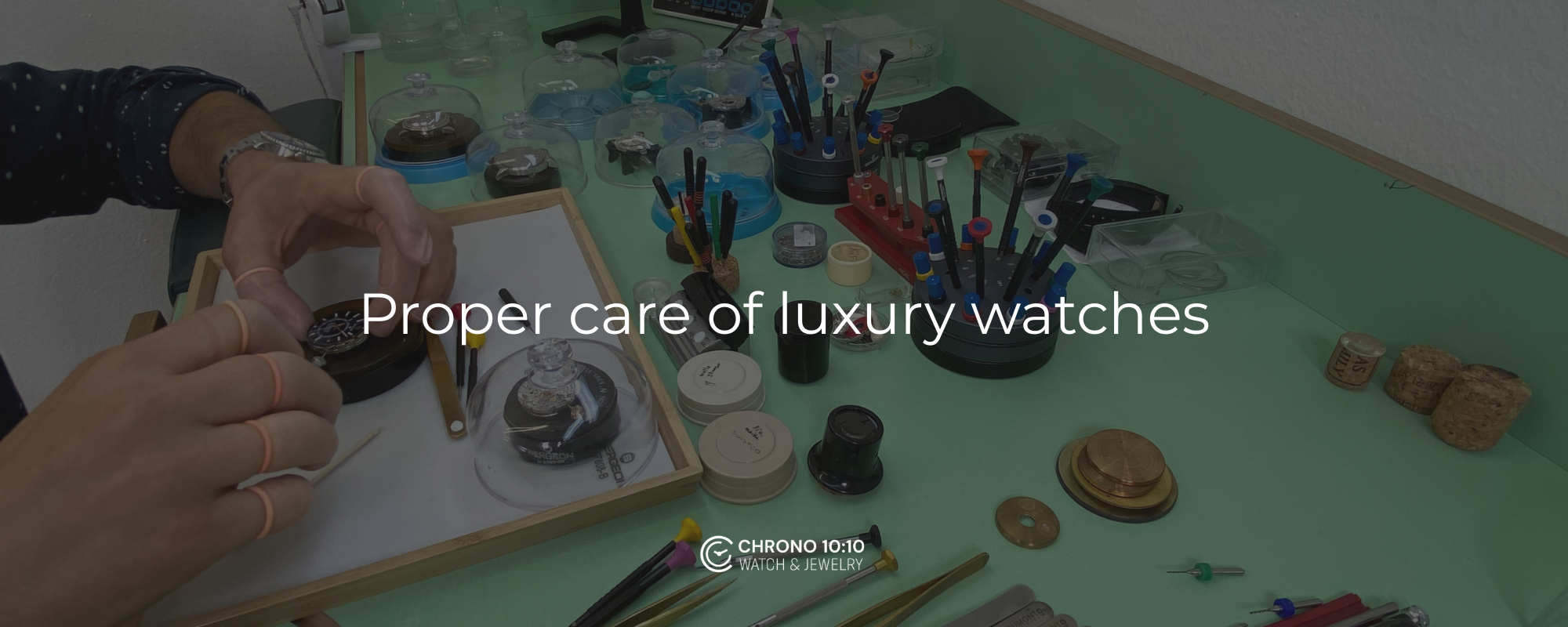
To ensure every care recommendation is properly followed, trust experienced Chrono 10:10 watchmakers. They will advise you on when your watch should be serviced, how it should be stored, and provide professional assistance. As preventive maintenance, experts recommend checking all functions, verifying timekeeping accuracy, cleaning and lubricating the movement, and replacing the gaskets at least once every 2–3 years.
How to Store Swiss Watches at Home
Proper home care plays an important role in preserving both the appearance and functionality of a luxury watch. This also applies to storage conditions. The materials used for the case, bracelet, and especially the movement can be sensitive to sudden changes in temperature and humidity, while lubricants may thicken over time. This can lead to so-called oil starvation, increased friction, and a higher risk of mechanical damage.
The optimal storage conditions for Swiss watches are:
- temperature between +15 and +22°C;
- relative humidity of no more than 40–50%;
- the use of silica gel packs stored alongside the watch in individual boxes;
- compact dehumidifiers for safes that absorb moisture from the air and can be recharged from the power supply;
- for large collections of automatic watches, a watch winder is recommended.
The ideal solution is a dedicated safe with humidity control.
It is also important to use high-quality lubricants with a high viscosity index, as they remain stable under demanding conditions. However, such maintenance should always be entrusted to qualified watchmakers. Avoid excessively dry air as well, since it can damage leather straps — humidity should not fall below 20%. In addition, protect your watches from prolonged exposure to ultraviolet light. If you own multiple watches, consider storing them in display cases equipped with UV protection.
The best way to store a luxury watch is on a firm watch cushion with the dial facing upward. However, any guide to proper home storage would be incomplete without mentioning how often a mechanical watch should be wound while it is not being worn. For most standard watches, the recommended interval is every 1–2 days. When winding the watch, avoid applying excessive pressure to the crown and handle it with care.
Anti-Magnetic Protection
A magnetic field stronger than 4,800 A/m can negatively affect the key components of a watch movement and may even cause serious damage. While leading watch brands devote significant attention to anti-magnetic protection, the balance spring remains vulnerable even in the most advanced and sophisticated mechanical movements.
To minimize exposure to strong magnetic fields, keep your watch away from common sources such as household appliances, microwave ovens, wireless smartphone chargers, televisions, and computers.
If you suspect that your watch has been exposed to magnetism, the best solution is to have it checked by the specialists at Chrono 10:10. The procedure takes only a short time but requires professional diagnostic equipment available in a watchmaking workshop. Prevention, however, is much easier—simply keep your watch approximately 5–10 cm away from potential magnetic sources.
The use of silicon components and anti-magnetic alloys such as Nivachron or Nivarox significantly reduces a movement's sensitivity to magnetic fields. In addition, some watch manufacturers incorporate special ferromagnetic shielding into their designs. Brands including Omega, Rolex, Tudor, and Vacheron Constantin use these technologies.
A Watch Winder Is More Than Just a Storage Box
At first glance, an elegant watch box appears to do nothing more than protect a watch from dust and accidental damage. In reality, it serves a far more important purpose.
When an automatic watch is not worn every day, its time and calendar need to be reset regularly. That is exactly why watch winders were developed—to keep automatic mechanical watches running while they are not on the wrist.
The principle is straightforward. Place the watch on the dedicated cushion and select the desired rotation program. The winder automatically rotates the watch at preset intervals, allowing the movement to receive energy by simulating the natural motion of the wrist rather than relying on actual wear. As a result, the watch continues running accurately and is always ready to wear without resetting the time or date.
A watch winder operates using a compact electric motor powered either by mains electricity or rechargeable batteries. There are two main types:
- Basic winders rotate the watch in a single direction at fixed intervals.
- More advanced models allow full programming, including rotation direction, rotation frequency, the number of turns per day, and even automatic stopping once the mainspring is fully wound.
For certain watch models, manufacturers recommend giving the movement a few manual winds before placing it inside the winder.
If you travel frequently or lead an active lifestyle, investing in a dedicated travel watch case is highly recommended. This compact case protects your watch from impacts, scratches, and dust during trips or flights. The watch is securely held on a firm cushion that provides excellent shock absorption while protecting the delicate components of both the case and the movement. We provide these travel cases as a complimentary gift to our customers.
Bracelets and Straps
Even if your bracelet or strap appears perfectly clean, it is actually one of the main places where dirt and bacteria accumulate. The proper care method depends on the material.
Material | Cleaning method |
Metal (including titanium and stainless steel) | Wipe the bracelet with a soft cloth and wash it in warm soapy water once or twice a month. To remove dirt between the links, use a soft toothbrush or a wooden toothpick. Never wash metal bracelets in salt water or chlorinated water, as this may cause corrosion. |
Leather and Textile | Rinse with warm water and allow the strap to dry naturally. Leather straps can also be treated with dedicated leather care products to maintain their shine and flexibility. |
Ceramic | Ceramic bracelets can be wiped daily with a dry cloth. For heavier dirt, use a soft cloth dampened with warm water and a drop of neutral liquid soap. |
Suede and Nubuck | These materials are best cleaned using a soft, short-bristled brush. Nubuck can also be treated with starch or talcum powder before brushing. |
Silicone | Wash with warm soapy water and wipe dry with a soft cloth. If the silicone has become discolored, it can be gently cleaned with a white eraser. |
Rubber | Rubber straps can be cleaned using grated household soap mixed into a paste. Apply the mixture with a cotton pad, leave it for about 30 minutes, then remove it with a microfiber cloth and allow the strap to dry completely. |
To learn more about cleaning your watch at home, consult an experienced watchmaker. Professionals point out that home cleaning cannot guarantee the complete removal of dirt and bacteria, as contamination is not always visible to the naked eye.
Your watch may also require polishing. This is a labor-intensive procedure that requires professional skills and specialized equipment. We generally recommend polishing a watch before offering it for sale.
Complete Movement Service (Repassage) for Swiss Watches
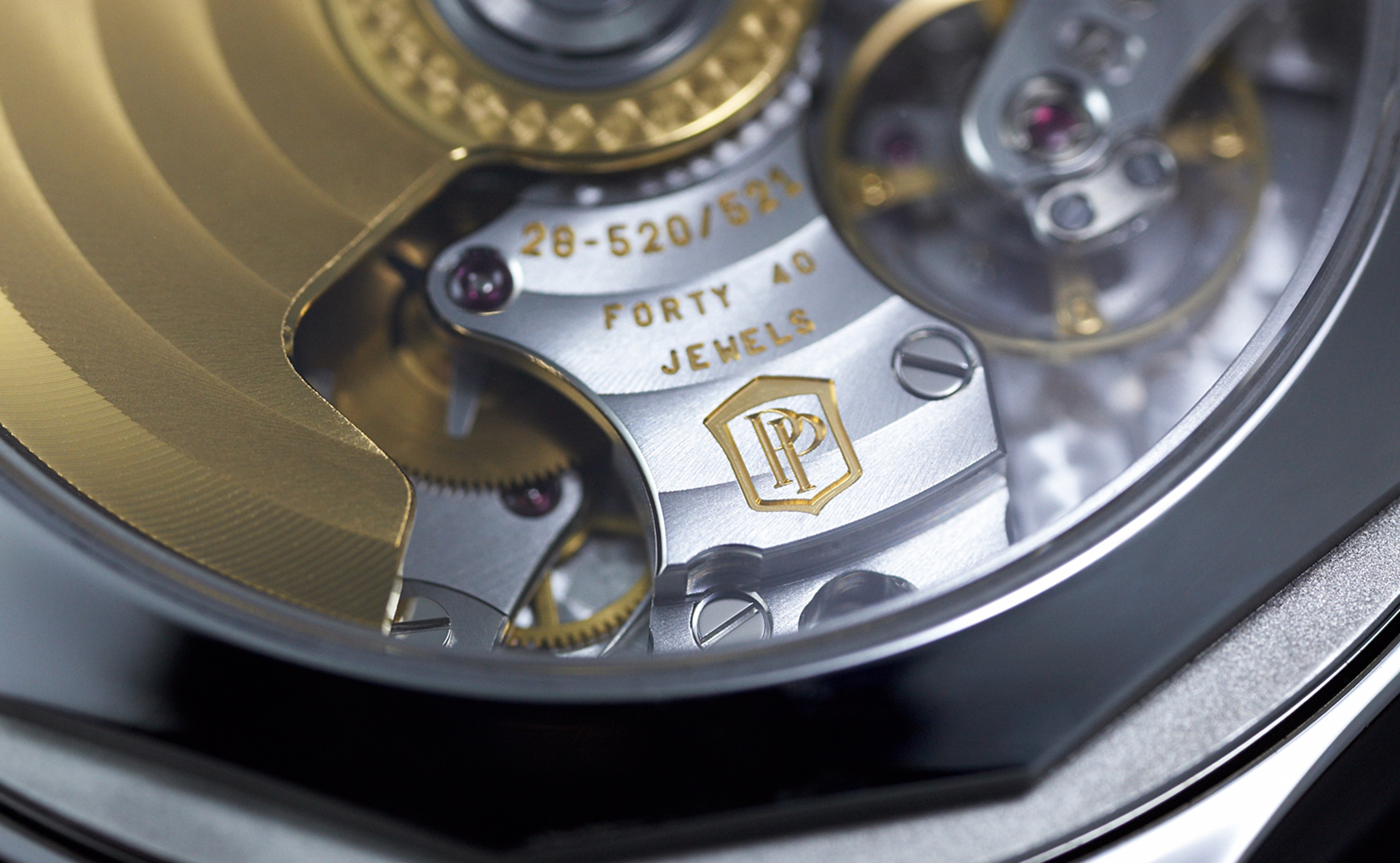
Repassage is one of the most effective procedures for resolving the majority of technical issues in a mechanical watch. It is a complete preventive service and deep cleaning of the movement designed to restore factory performance and timekeeping accuracy.
The primary objective is to prevent future failures. During a complete repassage, the movement undergoes a thorough technical inspection, full post-warranty servicing, and repairs whenever necessary. Experts recommend performing this service every 3–5 years.
Modern luxury watches are also equipped with numerous additional complications. The more mechanically sophisticated the watch, the greater the number of components subject to wear, including chronograph modules, perpetual calendars, and retrograde mechanisms.
A complete repassage typically includes:
- cleaning and lubricating the movement;
- replacing worn components and gaskets;
- regulating the movement;
- testing water resistance.
The first signs that your watch should be serviced include gaining or losing more than 10–15 seconds per day, a crown that becomes difficult to turn, or unusual noises coming from the automatic winding system.
If the crystal has been damaged—for example, by a crack or a deep scratch—you should also bring the watch to the specialists at Chrono 10:10. In such cases, polishing or crystal replacement may be required to prevent dust and moisture from entering the movement.
What You Should Never Do with a Luxury Watch
Swiss watches are the result of centuries of craftsmanship by brilliant engineers and generations of master watchmakers. They therefore deserve careful handling and proper maintenance. Follow these important recommendations:
- Never wind your watch while it is on your wrist, as this places unnecessary lateral pressure on the winding stem.
- Do not overwind the movement, and always remember to screw the crown back into place.
- Never adjust the date between 9:00 PM and 2:00 AM. During this period, the movement is preparing for the automatic date change, and manual adjustment may damage the mechanism.
- Do not set the hands backward.
- Never leave your watch in direct sunlight or in freezing temperatures.
- Keep your watch away from children (it is not a toy) and from pets.
- Avoid wearing an expensive luxury watch together with other metal bracelets, even precious metal ones, as they may scratch or chip the case and its edges.
FAQ
Can I store my watch in its original presentation box?
Yes, but only for temporary storage. For long-term storage, it is better to use a dedicated watch box with a soft interior, individual compartments, and dust protection. Original brand boxes are not designed to maintain stable humidity levels or provide sufficient shock protection.
Do I need a watch winder if I own only one watch?
No. A watch winder is most useful when you own at least two automatic mechanical watches that you rotate regularly. For a single watch, a standard watch box or cushion is perfectly sufficient. Continuous operation in a winder also creates additional wear on the movement.
How often should I wind a watch that is being stored?
A manually wound mechanical watch should be wound once a month with approximately 30–40 turns of the crown. This helps distribute the lubricants throughout the movement and prevents them from drying out. Automatic watches can simply be gently shaken before being placed back on their cushion—manual winding is generally unnecessary unless specified by the manufacturer.
How should I store my watch if my safe does not have humidity control?
Place silica gel packets inside the safe or use a compact safe dehumidifier. Replace or dry the silica gel every 2–3 months. Also make sure that your watches do not come into contact with one another by using soft compartments or separators.
What should I do if my watch has been stored in excessive humidity, heat, or dust and is no longer functioning properly?
Do not wind it or continue wearing it. Take it to the specialists at Chrono 10:10 for inspection as soon as possible. It will most likely require a complete repassage, including full disassembly, cleaning, fresh lubrication, and gasket replacement to restore proper sealing. The longer maintenance is postponed, the greater the risk of permanent damage to the movement.
How should I store my watch if my home becomes very hot during summer?
The ideal storage temperature for a mechanical watch is between 15 and 22°C. If indoor temperatures rise above 25–28°C during summer, place the watch box or safe in the coolest available location and keep it away from direct sunlight. High temperatures accelerate lubricant deterioration, although short-term exposure to temperatures of up to 30°C is generally not harmful. Chrono 10:10 experts also recommend never leaving valuable watches inside a parked car or on a windowsill.