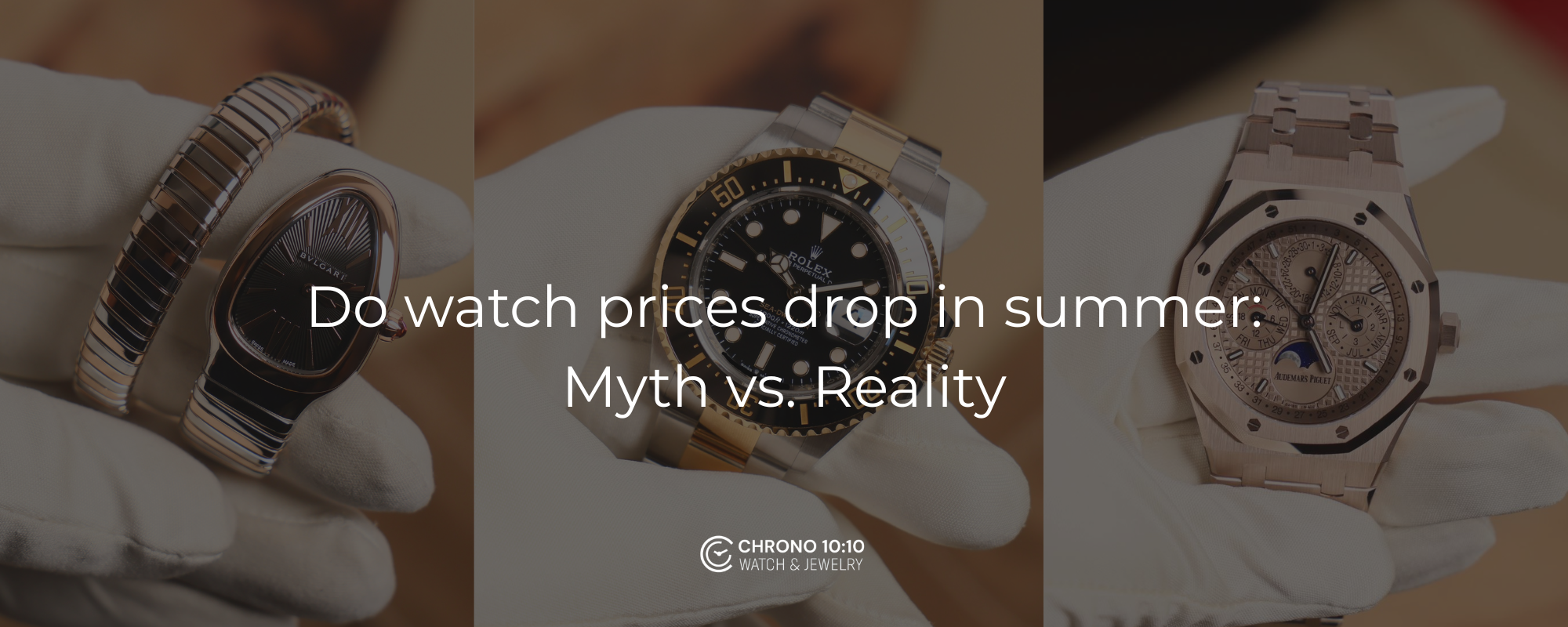
Seasonality in purchasing is a well-established marketing tool across virtually every retail sector, helping businesses clear inventory before launching new collections, which fashion brands typically release several times a year. Product lines—including clothing, footwear, accessories, and more—are designed around seasonal assortment updates. However, there is one industry where this principle does not apply: Swiss watchmaking, where pricing is determined by entirely different factors. While premium watches do experience price fluctuations, upward or downward movements are not tied to the consumer calendar, and the slowdown in business activity before the summer holiday season does not lead to a decline in demand for luxury timepieces.
Where the Myth of Summer Discounts Comes From
The myth that watch prices fall in summer stems from applying the logic of the broader retail market—particularly the fashion industry—to the premium watch segment, especially Swiss-made watches. In reality, completely different rules apply here, and they have nothing to do with seasonality. Price movements are explained by a simple fact: the prices of most luxury watch brands increase almost every year by an average of 5–10%. This process is driven by several well-defined factors:
- inflation expectations in the global economy, including those related to geopolitical instability;
- rising prices for raw materials, including precious metals, diamonds, and gemstones;
- investments in engineering development and innovative movements;
- limited production runs that stimulate demand by creating artificial scarcity.
Premium watches are expensive not only because of their materials but also because they represent hand craftsmanship, advanced technology, prestige, and status. If seasonality in fashion is primarily a matter of marketing logistics, then in the watch industry it is a story worn on the wrist and a way to diversify investments into a valuable asset.
Why the Premium Watch Market Knows No Seasons
According to the ChronoPulse Watch global price index, the balance between supply and demand in the luxury watch market is not driven by seasonal events such as sales, discounts, or promotional campaigns. Seasonality may only amplify broader economic processes that shape purchasing trends within the market. For example, changes in import duties, fluctuations in the Swiss franc-to-dollar exchange rate, or rising gold prices regularly force brands—including Cartier and Rolex—to increase retail prices by 5–10%, regardless of the season.
A key characteristic of the watch industry is that models from leading luxury brands remain in production for years and even decades. Moreover, these watches do not have:
- an expiration date, meaning there is no need for seasonal discounts on "outdated" models that must be sold before new collections arrive;
- clearance sales, since there is no overproduction of seasonal inventory.
At the same time, factors such as the annual upward trend in prices and rising production costs have contributed to the growth of online platforms for private transactions, where pricing is determined by the seller.
How the Pre-Owned Watch Market Works
The Pre-Owned market—literally meaning "previously owned"—is the segment of the watch industry dedicated to premium and luxury watches that are sold again after their initial purchase. It functions as a barometer of the global watch ecosystem and consists of:
- specialized online marketplaces where secure transactions are conducted by private individuals and professional dealers;
- watch pawn shops and auction houses that purchase watches, verify their authenticity, perform servicing when necessary, and resell them with a margin; the primary difference is that auction houses specialize in rare, collectible, and historically significant models;
- CPO (Certified Pre-Owned) programs operated by official watch manufacturers, which sell previously owned watches after complete servicing and provide an international warranty.
However, unlike the traditional second-hand market, today's Pre-Owned watch sector is a sophisticated, technology-driven, and rapidly growing industry with an annual turnover of tens of billions of dollars. The secondary market for premium watches is divided into three categories:
- Pre-Owned. Modern or relatively recently manufactured watches that have already had previous owners.
- Vintage. Rare models generally produced more than 20–30 years ago.
- NOS (New Old Stock). Watches from previous years or discontinued models that have never been worn and still retain their original factory stickers and documentation.
The operating principles of the Pre-Owned market are the same for all participants. They include thorough authentication of every movement and component, as well as pricing based on the watch's technical condition. Watches from the most sought-after and prestigious luxury brands are highly liquid and can be considered attractive investment assets.