Watches produced from the mid-1980s to the mid-2000s remained overlooked for many years. Today, they are attracting increasing attention thanks to their rare combination of style, reliability, and value. Compared to classic vintage watches, they are less fragile, yet they offer a stronger appeal to modern tastes. These are neo-vintage timepieces, representing a pivotal period in the watch industry when, following the Quartz Crisis, many renowned manufactures were rebuilding stability but had not yet entered the era of large-scale collections and powerful marketing.
Market experts identify several defining characteristics of neo-vintage watches:
- restrained proportions without unnecessary excess;
- well-balanced ergonomic designs suitable for everyday wear;
- reliable automatic movements and improved water resistance.
In today's pre-owned watch market, the growing popularity of neo-vintage pieces is driven by an increasing appreciation for authenticity and the rising prices of classic vintage watches.
Why Neo-Vintage Is So Popular
Within the watch market, neo-vintage represents the perfect balance between old-school traditions and the reliability of modern timepieces. This reflects a broader shift among collectors toward more mature collecting, where history, character, and craftsmanship are valued more highly than mass production and media hype. Purchasing a neo-vintage watch requires knowledge, careful attention, and a thoughtful approach focused on preserving both the watch's real value and its investment potential.
Classic vintage and neo-vintage watches differ according to several key criteria:
| Criterion | Classic Vintage | Neo-Vintage |
|---|---|---|
| Crystal | Primarily acrylic (Hesalite) | Sapphire or mineral crystal |
| Movement | Calibres built to earlier standards of durability and precision | Reliable movements engineered for improved shock resistance and greater durability |
| Luminous Material | Radium, tritium (T<25) | From 1998, the transition from tritium to LumiNova, followed by Super-LumiNova from 2000 |
| Case Size | Typically up to 38 mm | 36–40 mm |
The main driving force behind demand for neo-vintage watches is the desire for individuality, the return of refined elegance, and the opportunity to own prestigious brands without an unlimited budget. This unique combination of subtle nostalgia, aesthetic significance, and practicality explains the growing appeal of this segment of the secondary watch market.
Which Neo-Vintage Watches Are Worth Buying
Today, the greatest attention is drawn to neo-vintage watches that reflect the spirit of their era while remaining reliable and practical for everyday use. Three brands stand out in particular:
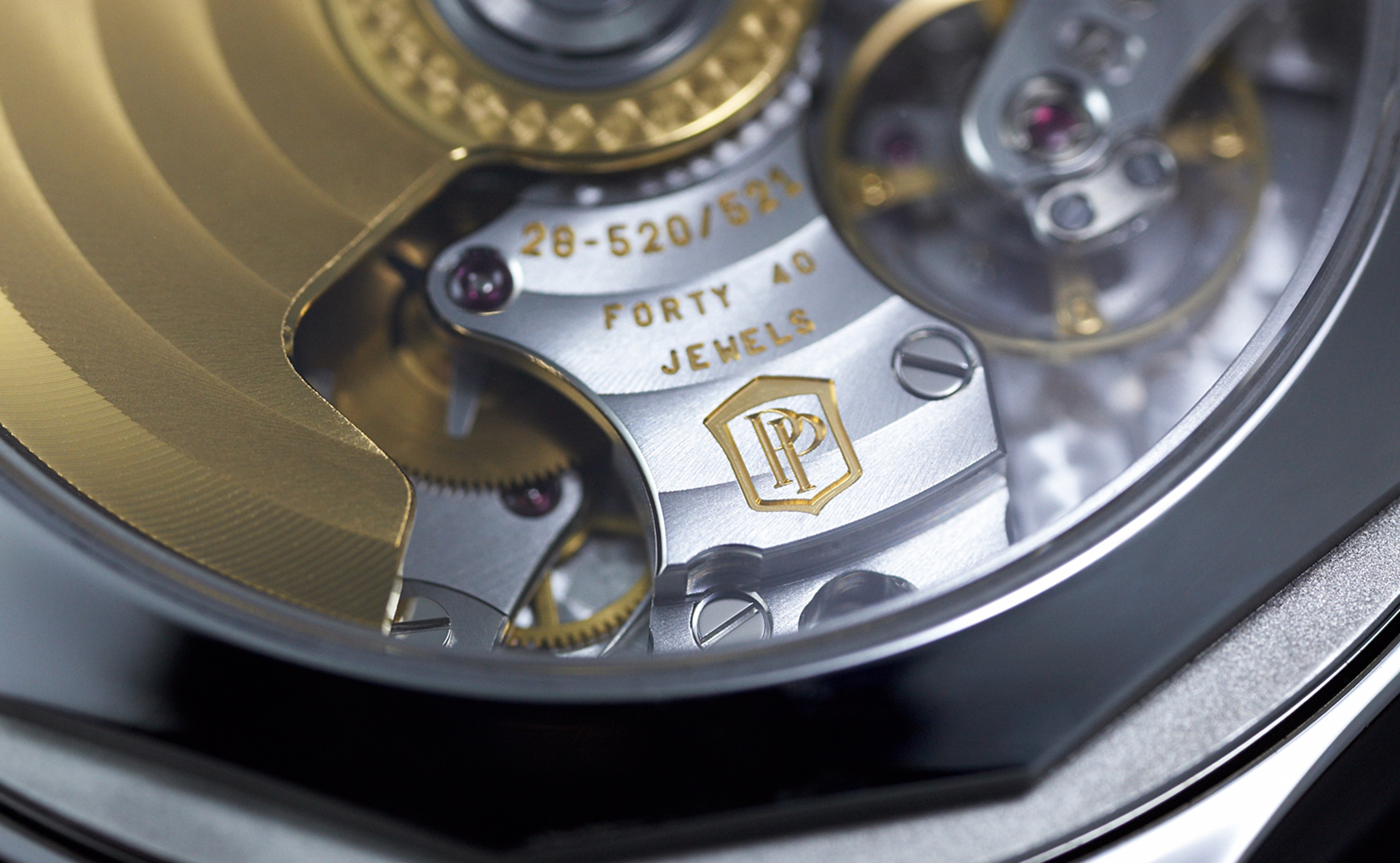
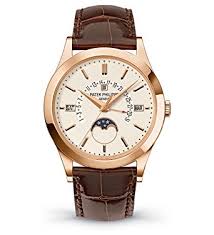
Patek Philippe with the Ref. 3970 chronograph (1986–2004). It is powered by a calibre that was among the first third-party movements to receive the Geneva Seal, as well as the Ref. 3940, featuring a micro-rotor and a perpetual calendar.
Audemars Piguet with the compact Royal Oak Ref. 14790ST (1992–2006). With a 36 mm case and a thickness of only 7.5 mm, it preserves the original design proportions created by the renowned Italian designer Gérald Genta.
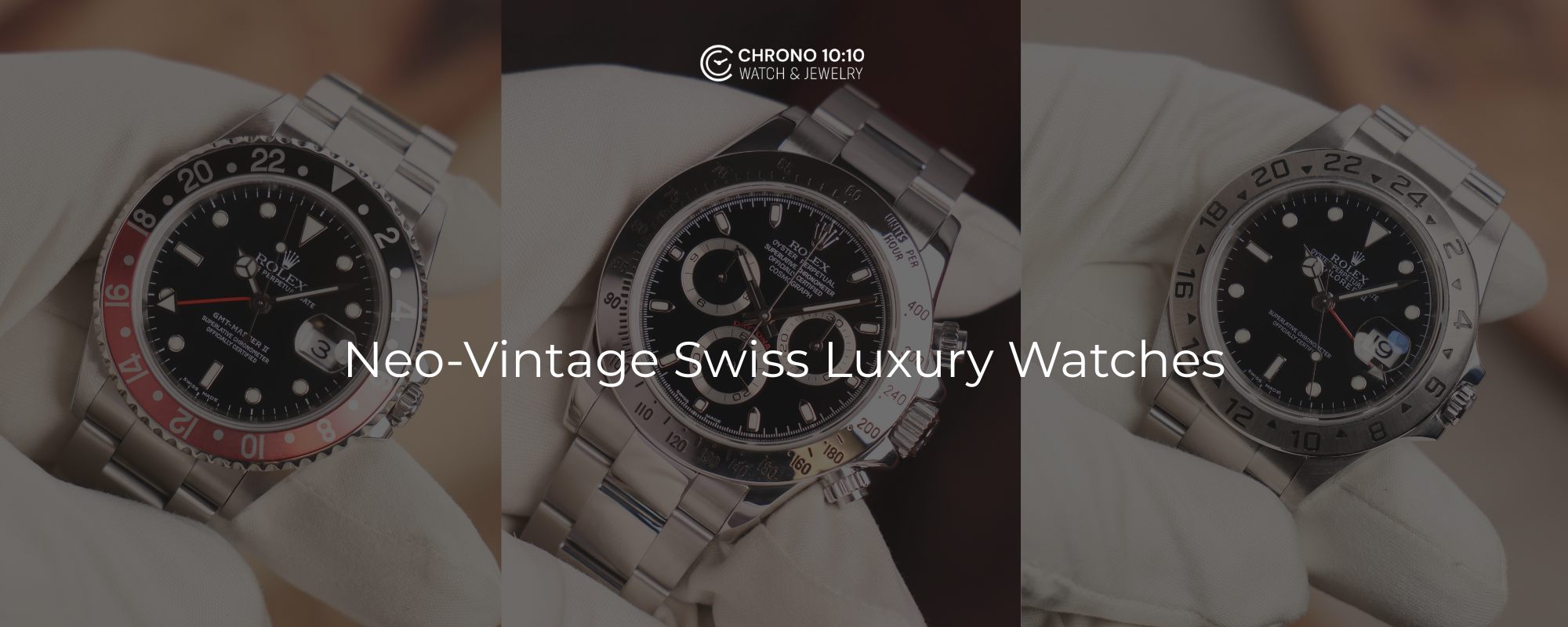
Rolex with its neo-vintage references, combining classic proportions, slimmer lugs, aluminium and steel bezels, and reliable calibres. These models remain among the most sought-after Rolex watches by collectors.
At the same time, watches in this category require thorough inspection, making it essential to evaluate not only their technical condition but also their service history. This period is no longer considered a "grey area" of the market—it has developed its own identity and market logic. Produced 20–40 years ago, these watches remain highly relevant today while offering strong potential for the future.
Neo-Vintage Rolex: The Return of a Perfect Balance
The experts at Chrono 10:10 recommend paying attention to the unique combination of timeless design and modern engineering found in the following iconic Rolex models, all of which can be sourced through our team.
GMT-Master II 16710
One of the most popular neo-vintage sports models, produced between 1989 and 2007. Its defining feature is the second time zone, while the rotating 24-hour bezel makes it possible to track time across as many as three different time zones.
Key specifications:
- 40 mm stainless steel case;
- aluminium bezel available in black, black and red, or red and blue, serving as a direct predecessor to today's ceramic bezels;
- early models were fitted with the automatic Calibre 3185, while later versions received Calibre 3186, both featuring an independently adjustable hour hand, chronometer-certified accuracy, and a date display;
- luminous materials evolved throughout production from tritium to LumiNova and later Super-LumiNova.
The watch was offered with the integrated Rolex Oyster or Jubilee bracelet.
Submariner Date 16610
Produced for 22 years (1988–2010), this Rolex model embodies both longstanding design traditions and the technological improvements introduced throughout its production run. For many enthusiasts, the Submariner Date 16610 represents the definitive neo-vintage Rolex.
Key specifications:
- 40 mm stainless steel case with lugs whose shape evolved over different production years;
- automatic Calibre 3135, COSC-certified as a chronometer, featuring a quickset date function;
- black dial with a date window at 3 o'clock beneath the Cyclops lens;
- unidirectional black aluminium bezel insert;
- luminous hour markers using either tritium or LumiNova, depending on the production period.
With water resistance rated to 300 metres, the Submariner Date 16610 remains a true professional dive watch.
Explorer II 16570
The Rolex Explorer II Ref. 16570 (1989–2010) is one of the brand's most underrated references while remaining exceptionally faithful to the concept of the original Explorer, developed for cave explorers and professional adventurers. Its defining feature is the red 24-hour hand with a distinctive triangular tip. Combined with the independently adjustable hour hand (Calibres 3185 and 3186), it allows the wearer to track a second time zone or distinguish between day and night in extreme environments.
Key specifications:
- 40 mm Oyster case in stainless steel;
- in-house automatic Calibre 3185 or 3186, COSC-certified as a chronometer;
- fixed stainless steel bezel;
- black or white dial, with the white "Polar" version being the more desirable among collectors;
- date display at 3 o'clock beneath the Cyclops lens;
- luminous material evolved from tritium to LumiNova and later Super-LumiNova around the turn of the century.
The Explorer II Ref. 16570 is an excellent choice for frequent travellers and anyone who values the convenience of an independently adjustable hour hand.
Daytona 116520
The Rolex Daytona 116520 (2000–2016) occupies a special place among neo-vintage Rolex models. It was the final Daytona reference fitted with a stainless steel bezel before Rolex introduced ceramic bezels on subsequent generations. It also became the first Daytona powered by Rolex's in-house Calibre 4130 chronograph movement with a 72-hour power reserve, replacing the modified Zenith El Primero movement used since 1988.
Key specifications:
- 40 mm stainless steel case;
- stainless steel bezel with tachymeter scale;
- black or white dial featuring a tricompax layout with three sub-dials positioned at 3, 6, and 9 o'clock;
- water resistance to 100 metres.
Its 72-hour power reserve, timeless design, technical innovations, and historical importance make the Daytona 116520 one of the most desirable references on today's secondary market.
Day-Date 36 Ref. 18238
One of the most iconic gold Rolex models produced during the neo-vintage era (1988–2000). While benefiting from several technical improvements, it retained its classic design and exceptional wearing comfort. One of its defining features is the movement equipped with the practical double quickset function, allowing the day of the week and the date to be adjusted independently.
Key specifications:
- 36 mm Oyster case crafted from 18 ct yellow gold;
- fluted bezel;
- dial available in a wide range of colours and materials, including champagne, silver, black, natural stone, and wood, with baton markers, Roman numerals, or diamond-set hour markers;
- three-link President bracelet, also crafted from 18 ct yellow gold.
With one of Rolex's most recognizable silhouettes, the Day-Date 36 Ref. 18238 remains a symbol of prestige, making it a favourite among public figures, politicians, and celebrities.
Where to Buy Neo-Vintage Watches
Neo-vintage watches represent an excellent investment, as their prices have not reached the overheated levels often seen in rare collectible vintage watches. At the same time, they offer the unique combination of modern mechanical reliability and the character of the era in which they were created by the world's leading manufactures. These watches deliver exceptional quality and dependability while preserving the timeless aesthetics of vintage timepieces from the early and mid-20th century.
At the Chrono 10:10 boutique, you can find the neo-vintage watch that best suits your preferences. We carefully source outstanding examples from the secondary market, guaranteeing authenticity and excellent technical condition. Visit us, and we'll do everything we can to become your favourite destination for luxury watches.