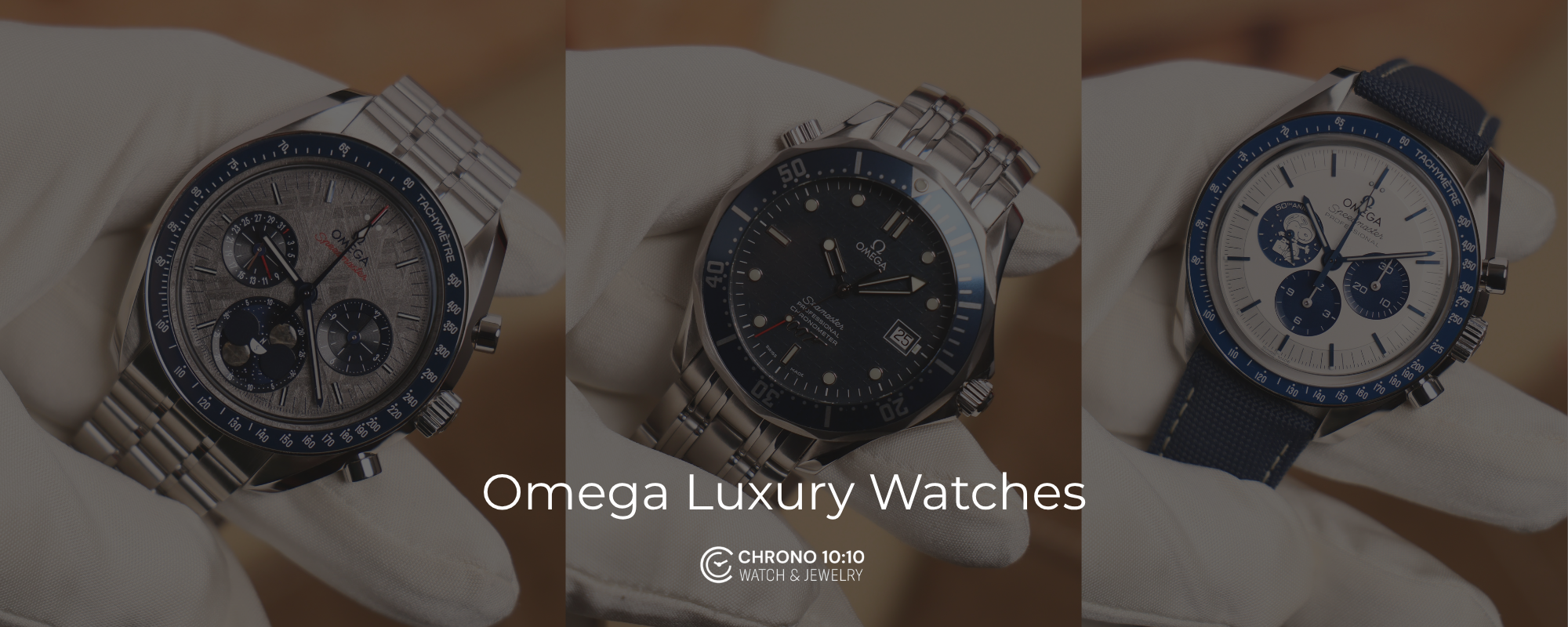
Premium watch brand Omega from La Chaux-de-Fonds, Switzerland, is the only timepiece to have been on the Moon and to have become a genuine technological competitor to other renowned companies. Omega watches are known for the brand’s proprietary co-axial escapement and one of the strictest Master Chronometer certification standards, verified by the Swiss Federal Institute of Metrology (METAS). High standards of precision combined with accessibility reinforce the meaning behind the name of these watchmaking masterpieces — Omega as a symbol of completeness and an integral part of global culture, science, and sport.
Omega’s Success Story: From Its Origins to the Present Day
The Omega brand, founded by Louis Brandt in 1848, initially focused on precision and full-cycle production with interchangeable movements, innovative technologies, and highly sophisticated technical complications. This allowed Omega to:
Become the official timekeeper of the Olympic Games as early as 1932, retaining this status to the present day. Launch the serially produced Constellation chronometer as a separate collection in 1952.
Develop some of the first Omega Marine diving watches in 1932, create the first Swiss wristwatch tourbillon 15 years later, and introduce the first Seamaster, inspired by military models, another year later.
Create the unique Seamaster Diver 300M with a helium escape valve in 1993.
Receive NASA qualification for the Speedmaster in 1965 for all crewed space missions and travel into space on the wrists of American astronauts Walter Schirra and Buzz Aldrin.
Launch the professional trilogy in 1957 — Speedmaster, Seamaster 300, and the antimagnetic Railmaster.
Present the Seamaster Professional 300M as an essential part of James Bond’s look, portrayed by Pierce Brosnan, in 1995.
From 1999 to 2013, patent a series of technical improvements: the first serially produced Co-Axial escapement; a movement designed around the co-axial system from the ground up; the first serially produced watches with a high level of antimagnetic resistance; production of proprietary movements with Co-Axial technology, and more.
2023 marked the creation of the Spirate balance spring system with an accuracy of 0/+2 seconds per day, while 2026 saw the introduction of the world’s first two-hand Constellation Observatory watches with Master Chronometer certification.
Visually, Omega watches reflect the design genius of renowned Italian designer Gérald Genta, who in 1964 created his first significant contribution to Swiss watchmaking — the C-shape case design for the Constellation line. The same collection later introduced the Manhattan, the most recognizable model by silhouette, featuring four distinctive “claws” on the case.
Omega is part of the Swatch Group. According to Morgan Stanley estimates, today it generates around 80% of the group’s total operating profit, supported not only by its unique manufacturing capabilities but also by its own accredited Laboratoire de Précision, which enables Omega models to remain at the forefront of the industry.
The Omega Universe: Precision and Impeccable Execution
There is a perception that Omega exclusively produces men’s watches with simple, functional designs in a classic style: round cases, medium sizes, wide lugs for integrated bracelets, and traditional dial layouts. In reality, the brand’s collections include numerous classic models as well as specialized timepieces for flying, diving, racing, and sports. There are also elegant women’s versions that are versatile and harmonious with any look. Let us examine the main model lines.
Speedmaster — the Moon Chronograph
The precision of these legendary watches, introduced in 1957 as a chronograph for motor racing, became truly legendary after the Omega Speedmaster helped save the crew of the Apollo 13 spacecraft. Following a failure of the onboard electronics, the astronauts needed to calculate the timing of their safe re-entry into Earth’s atmosphere to the exact second. The Omega chronograph performed brilliantly in this situation, and the brand received NASA’s Silver Snoopy Award in 1970. A year earlier, following the astronauts’ Moon landing, the model became known as the Moonwatch. Its main characteristics include:
three movement versions — manual winding, automatic winding, and highly accurate quartz calibers (in specialized analog-digital lines);
an improved caliber with a co-axial escapement;
materials — gold, stainless steel, and combinations of metals;
resistance to magnetic fields of up to 15,000 gauss;
a black dial with a symmetrical chronograph counter layout and distinctive hand design.
The key features of one of Omega’s most extensive collections — Moonwatch, Heritage, Dark Side of the Moon, Two Counters, Instruments, Speedmaster 38 — include increased resistance to external influences through the use of silicon in the movements, meticulous assembly, and distinctive case construction. These are not simply watches with chronographs; they are instruments for space, with its weightlessness and high pressure.
Seamaster — the Ocean Home
The oldest model line still in production today, the first Seamaster watches appeared for the brand’s 100th anniversary. The collection’s main “gems” include the Seamaster Diver 300M (the famous Bond watch), Seamaster 300 (the classic), Planet Ocean (professional diver), and Aqua Terra (versatile timepiece). Specifications include:
proprietary caliber with a co-axial escapement and the full functionality of a marine chronometer;
materials — steel, gold, bronze-gold alloy, with models also available in titanium alloys and ceramic;
ceramic or anodized bezel with a 60-minute scale that rotates in only one direction;
dial with a unique wave-like texture and markers coated with luminescent material;
helium escape valve — the watches withstand pressure at depths of up to 600 m;
transparent sapphire crystal caseback and signature bracelet with micro-adjustment.
These are watches you can wear to work, take on deep-sea dives like French explorer Jacques-Yves Cousteau in 1970, and even save the world like James Bond in “GoldenEye.”
Constellation — Impeccable Precision
Introduced in 1952, the Constellation collection became the brand’s flagship in terms of chronometric precision. The eight stars engraved on the caseback and the model name commemorate achievements in observatory trials between 1933 and 1952: six first-place finishes and two world records. Key specifications include:
materials — steel, gold, platinum;
caliber with a co-axial escapement and full antimagnetic protection;
unique 12-sided pie-pan dial, where the sloping facets catch the light at unusual angles, changing its shade with even the slightest movement of the wrist;
wide, flat bezel with engraved Roman numerals, except III and IX, and a star at the 6 o’clock position.
The pie-pan dial, considered one of the most elegant in luxury watches, returned in 2015 with the Globemaster model. In 2026, the latest version of the Constellation appeared: the Observatory model, in which the dial facets became guilloché, while the steel versions featured ceramic elements. Constellation Observatory watches have only two hands, but they incorporate the new Dual Metric Technology, further improving precision.
De Ville — Strength in Elegance
Omega De Ville is a model for those who do not favor chronographs or diving bezels but still value precision and recognizability in a watch. The collection is regarded not only as elegant for everyday wear but also as the brand’s most “dressy” line. The main versions of this model family, which separated from Seamaster in 1967, include the jewelry-inspired women’s Ladymatic, ultra-thin men’s and women’s Tresor models, and Prestige with its classic three-hand configuration. Features include:
chronometer caliber with a serially produced co-axial escapement since 1999;
materials — stainless steel and rose/white gold;
minimalist dial design;
despite their slim cases, the movements in every model offer high precision, power reserve, and reliable protection against magnetic fields;
water resistance — from 30 to 100 m.
The De Ville collection is one of the few Omega lines in which classic versions are accompanied by models with unconventional designs: square cases, oval subdials, and more. These watches are the choice of politicians, major business figures, diplomats, and admirers of classical traditions.
Omega for Agent 007
Choosing an Omega watch is an expression of lifestyle and values, or of the “spy” style for which this particular brand received the license. Legendary Pierce Brosnan timed his operations using the Seamaster Professional Diver 300M in “GoldenEye.” Later, his preferred accessory became the Seamaster Professional Chronometer, which received its own 007 logo in “Tomorrow Never Dies.” Later, when the role and fame of James Bond passed to Daniel Craig, the “spy” collection included:
Seamaster Planet Ocean 600M (“Casino Royale”);
Seamaster Aqua Terra (“Skyfall”);
Seamaster 300 SPECTRE Limited Edition (“Spectre”);
Seamaster Professional 300M (“No Time to Die”).
This combination of a premium Swiss brand and iconic cinema created a combined effect of sophistication and adventurous spirit for Omega.
Famous Omega Owners
In addition to James Bond as portrayed by Pierce Brosnan and Daniel Craig, Omega watches have adorned the wrists of many historical and public figures. At various times, famous actors, models, and athletes have served as brand ambassadors: Nicole Kidman, George Clooney, Zoë Kravitz, Cindy Crawford, Michael Phelps, and Ukrainian athlete Yaroslava Mahuchikh. They have also been worn by presidents, princes, show-business stars, and film celebrities:
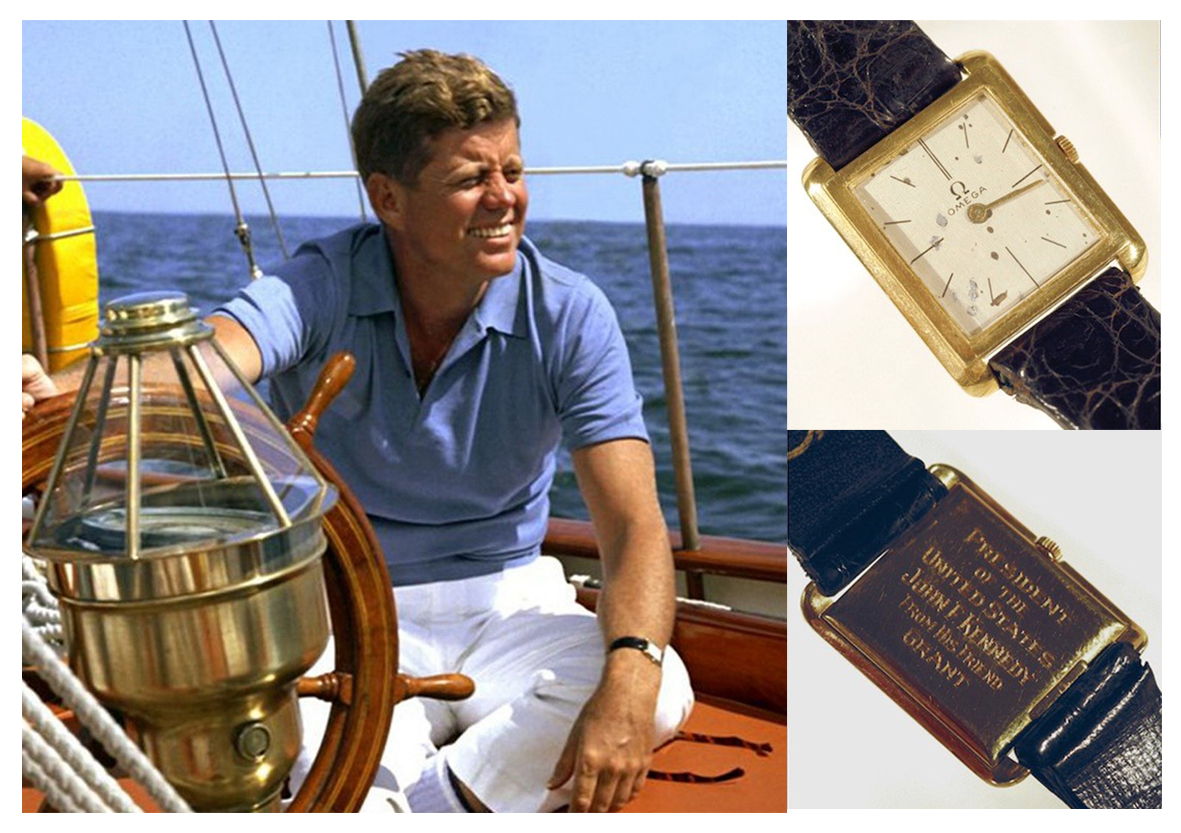
35th President of the United States John F. Kennedy — Ultra Thin OT3980;
Prince William, Prince of Wales — Seamaster Professional Diver 300M, received as a gift from his mother, Princess Diana;

principal shareholder and chief executive of the Italian FIAT brand Gianni Agnelli — Seamaster PloProf 600;
Canadian actor Ryan Reynolds — Speedmaster Dark Side of the Moon, Moonshine Gold;

46th President of the United States Joe Biden — Seamaster Professional Diver 300M and Speedmaster Professional Moonwatch.

The Omega brand has become a symbol of high status, success, and a certain level of wealth.
Investing in Omega: Pros and Cons
Purchasing any Omega model is a deliberate choice, especially for those familiar with the brand’s history. Omega collections are associated with reliability, engineering precision, and prestige. They maintain their own philosophy and recognizable design despite market trends set by competitors such as Rolex and even Audemars Piguet. The key is knowing what to look for in these watches. For example:
the legendary Speedmaster Calibre 321 and Speedmaster Silver Snoopy Award 50th Anniversary hold a special place in watchmaking history and retain their value over long periods;
vintage pre-Moon Speedmaster, Snoopy Limited Editions, PloProf 600M, Seamaster 200 SHOM, and Seamaster 300 SPECTRE models combine reliable movements, elegant design, and comfort while losing virtually no value;
professional Seamaster Planet Ocean 6000M models with enhanced case durability and a high level of protection demonstrate exceptional reliability for an active lifestyle.
Demand for Omega watches on the secondary market is high, although not all of them increase in value over time. Therefore, the choice should be approached carefully, and it is even better to consult professionals: the consultants at our Chrono 10:10 boutique. We will help you navigate the wide variety of models and advise you on what to look for.
What to Choose: Omega or Rolex
Both brands are recognizable and highly sought-after names among elite Swiss manufactures of a comparable class. They differ in engineering innovation (Omega is stronger in technology) and aggressive marketing tools (Rolex is more recognizable). Both brands have rich histories and strong investment potential. When choosing, you can consider the following criteria:
| Criterion | Omega | Rolex |
|---|---|---|
| Availability | Most models are available through lists from trusted suppliers | Many models are available through waiting lists |
| Variety | Huge selection of materials and sizes, with a broad color palette | More limited range |
| Price | Often lower than its competitor | Higher, with possible premiums on the secondary market |
| Investment | Some models genuinely increase in value | Almost all models increase in value |
| Design | More experimental | Conservative |
If you have decided to purchase an Omega model from any collection, contact Chrono 10:10. Our catalog includes current versions: both new releases and models that can only be found on the secondary market. Choose the model you like, and we will find the watch with insured delivery. We guarantee the confidentiality and security of the transaction, and if you have any questions, we are always available online.