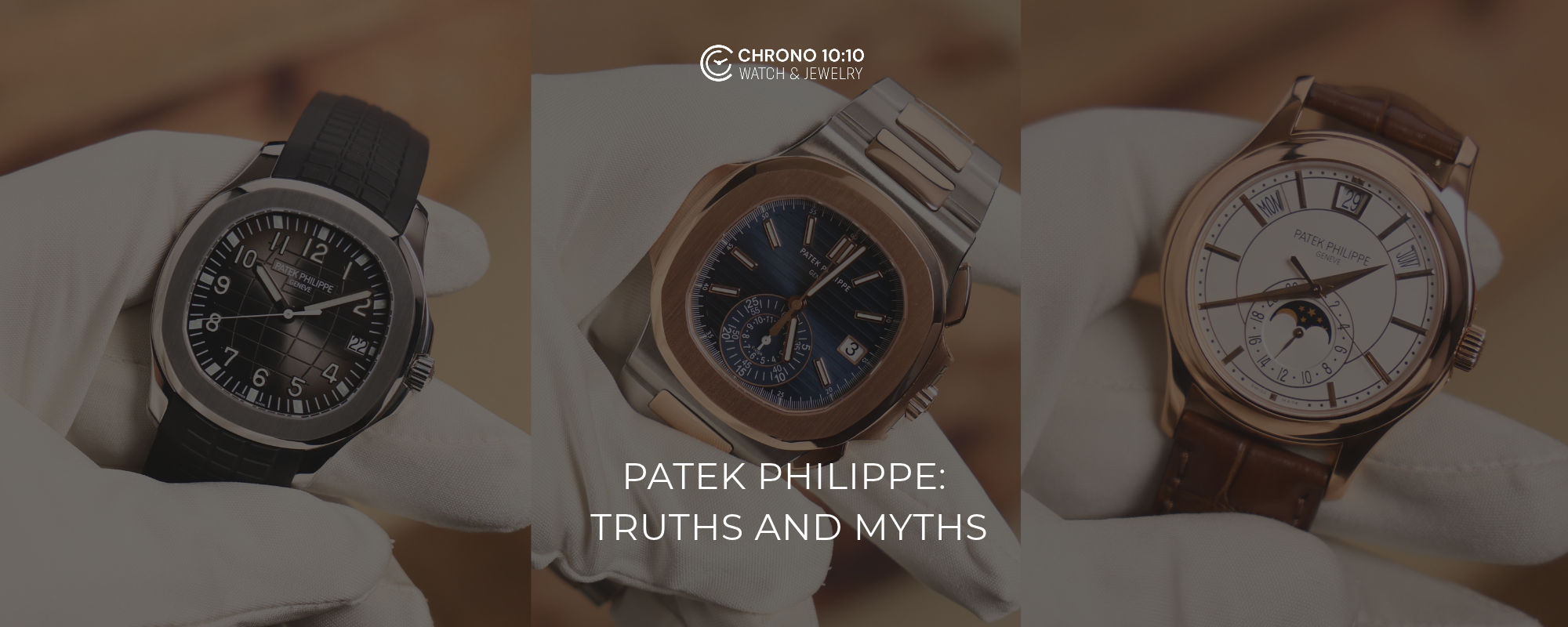
The world of Patek Philippe is an exquisite universe of watchmaking art. It sounds beautiful and expensive, but have the most luxurious watches from the historic Geneva manufacture truly become a “safe-haven” asset in our turbulent times? And is the perception that the Patek Philippe market has settled into a linear section of the chart, sometimes referred to as a “plateau,” actually accurate? This happens when a particular system reaches temporary equilibrium, its current resources have been exhausted, or the process has adapted to existing conditions. In reality, however, the Swiss brand has confidently taken the lead in both the primary and secondary markets for high-end models, relying on a strategy developed to restore its leadership.
Why the Patek Philippe Market Has Not “Fallen”
Many Patek Philippe collections today significantly outperform their competitors in the luxury Swiss watch market, supported by key methods developed by the company to ensure the brand’s upward trajectory. As a result, the stagnation and wave of corrections that have affected the watch market in recent years, including the premium segment, have largely bypassed Patek Philippe. Despite the pandemic and declining demand for all luxury goods, the brand’s sought-after models — Nautilus and Aquanaut — have gained between 4.5% and 182% in price over the past five years. The price peak, recorded at 3,200 points, occurred in 2022. At the same time, trends have emerged that make it possible to acquire favorite models at more accessible prices, particularly on the secondary market — by the end of 2025, the correction had reached 1,911 points.
At present, the Patek Philippe market is in a balanced state, but this does not mean that its momentum has slowed or declined — the upward movement stood at 2,083 points at the end of this August. The brand’s watches remain in high demand despite the weakening of speculative fluctuations. And this makes the Patek Philippe market even more attractive. Several specific factors are behind this confident growth:
A change in the structure of demand and a shift in focus from steel pieces to precious-metal models featuring innovative complications.
Deliberate regulation of retail sales and control over the geographic distribution of points of sale. For example, at the beginning of 2026, Patek Philippe adjusted retail prices in the U.S. market (by approximately 8%), which was associated with optimizing its local pricing policy and adapting to changes in customs and tax regulations. At the same time, prices in other regions increased by at least 4%.
Due to rising gold and platinum prices, the secondary market has become more active, with prices for pre-owned models from the premium brand stabilizing and becoming more transparent.
The strengthening of the media-driven component of demand, which is growing in anticipation of anniversary limited editions and technological breakthroughs.
Thus, Patek Philippe has become the No. 1 brand in terms of the percentage of investment watches, where the buying strategy can sometimes turn into an exciting adventure that can not only enrich the collector and their entire family historically and intellectually, but also lay a foundation that makes it possible not to worry about financial well-being. The watches of the famous Swiss manufacture are exceptional in quality and precision, combining all the advantages of a strategic asset:
growing global demand;
the undeniable prestige of a technical masterpiece;
preservation and growth of purchasing power;
high utilitarian value.
Therefore, regardless of whether you choose the desirable sportiness of the Aquanaut or the vintage refinement of the Nautilus, the combination of haute horlogerie and substantial capital should be enjoyed with a thorough understanding of both the subject and the market itself. Global rankings and experts argue with supporting evidence that Patek Philippe is not about a return to normality; this is a new growth cycle, even if the brand lingered on the plateau for a while before gaining dynamic momentum.
ChronoPulse Index Patek Philippe — An Objective Indicator
The Patek Philippe market value index from ChronoPulse Index is, first and foremost, a clear tool for monitoring secondary-market dynamics. It tracks more than 20 of the brand’s best-selling and most significant models, weighted by transaction volume and reflecting the average market price over a specific period. The index is based on a classical methodology (close to the Laspeyres model), using a fixed “basket” of the most liquid models from previous periods as its basis. Its key features include:
base coefficients, where the quantity of goods from the previous period is used as the basis;
an assessment of inflation that attempts to account for changes in consumer behavior.
At the same time, ChronoPulse Index is a publicly accessible and easy-to-use watch index that makes it possible to understand market trends. It is compiled based on daily updates. Thanks to its global coverage, transparency, and expertise, this indicator is considered a leading source of valuable professional information on market dynamics.
By observing changes on the ChronoPulse Index chart, one can conclude that the Patek Philippe market in 2026 is in harmonious balance:
pricing has become more rational, making the brand’s watches even more attractive;
rapid resale is less common, while methods of carefully storing luxury models are becoming more sought after;
sharp fluctuations in artificial demand have decreased, which in turn affects pricing, making it more transparent and stable;
collectors and enthusiasts of the brand are focused on long-term enjoyment of their luxury purchases, which helps reduce the influence of emotions on purchasing decisions.
Overall, the Patek Philippe market index (quotes) had risen by 3% by summer 2026. This was primarily thanks to models such as the Nautilus and Aquanaut, whose sales volumes increased by 17.2% and 16%, respectively. This indicates a trend of sustained upward movement: growth over five years amounted to 17.17%, while growth over the past 12 months alone reached 13%. At the same time, some of the most sought-after models on the secondary market have shown growth of up to 18% since the beginning of this year (for comparison, Rolex is at around 10%).
Ultimately, it can be stated that prices for luxury watches from the Swiss brand Patek Philippe are no longer holding on a linear section of the chart but are rising steadily and consistently. The average price is €45 thousand, although the price range is broad: from €10 thousand to €837 thousand. Prices at watch auctions can reach seven-figure sums, but most importantly, Patek Philippe should be purchased with the assistance of watch professionals. The consultants at the Chrono 10:10 boutique are ready to help find a version that suits your preferences and budget, as they continuously research the market and analyze the price dynamics of popular models. Join us, and your investments will always be well considered and profitable.
More Patek Philippe models