Having founded the Akrivia atelier at the age of 25, the young watchmaker from Kosovo experienced a meteoric rise, transforming his brand into a true Grail for connoisseurs of rare watchmaking. Today, according to the Financial Times, Rexhep Rexhepi is called the “Mozart of watchmaking.” His name is associated with independent haute horlogerie, while the watches he creates are already selling at auction for millions of Swiss francs. Rexhepi has achieved outstanding results even among the masters of watchmaking, as confirmed by two awards at the Grand Prix d’Horlogerie de Genève. And although no one expected such a bright star to appear in the watchmaking world, many have regarded Rexhepi’s rapid career as a tribute to the technical and aesthetic quality of Swiss brands. The master himself explains it by saying that one simply has to be authentic: “Be genuine, be yourself, open, sincere, crystal clear. No sleight of hand, no role-playing. Be yourself, follow your dream. It’s that simple. But it’s a long road...”
From Kosovo to Geneva
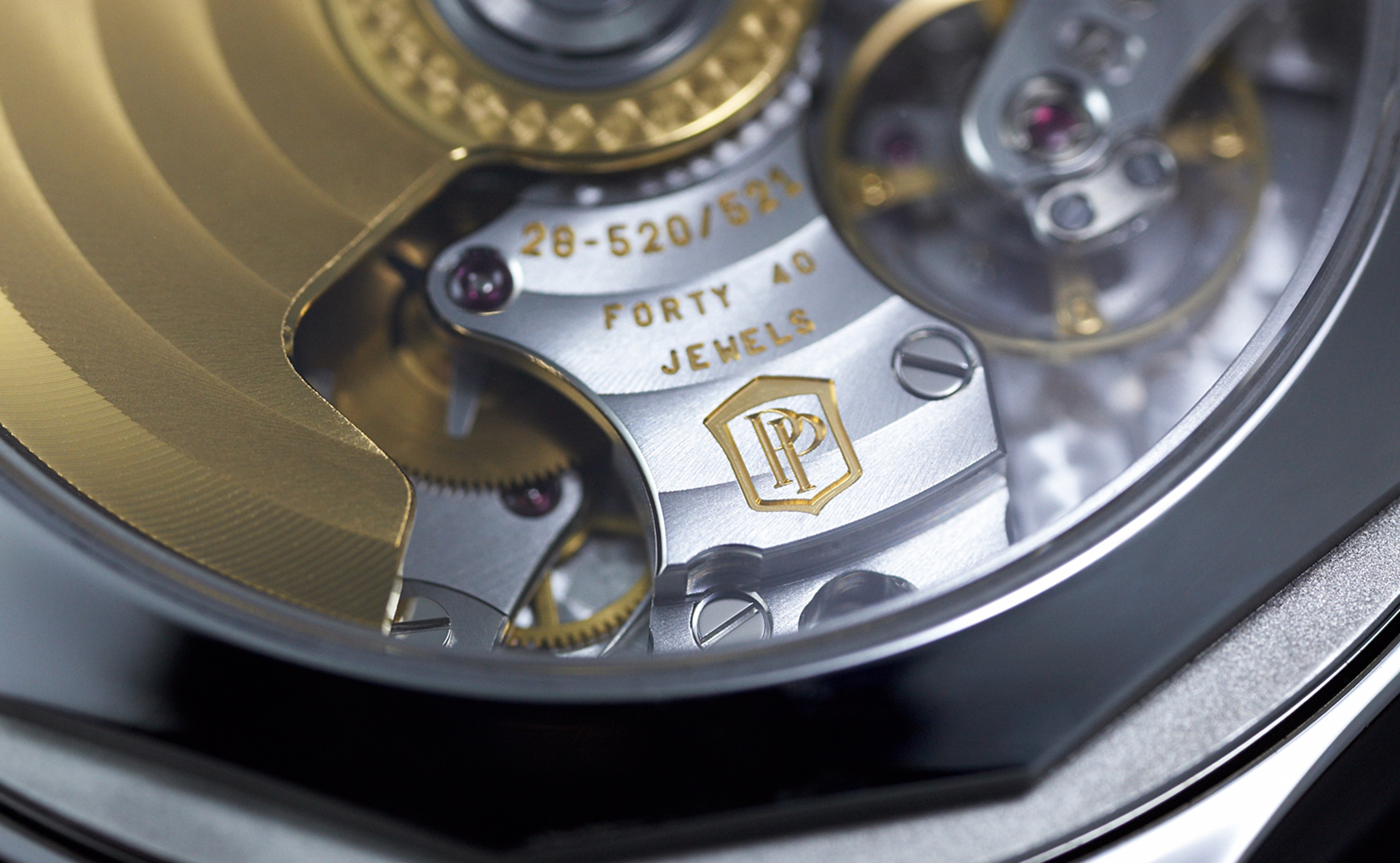
Rexhep Rexhepi was born in Kosovo. When the war forced him and his family to leave the country, he arrived in Switzerland at the age of 12, where his father was already living and working. His family was convinced that Rexhep’s calling was law, but his childhood fascination with mechanisms prevailed and gradually turned into a profession. He also happened to arrive in a city where watchmaking was part of the local culture — Geneva. At the age of 15, the future celebrated watchmaker left school and began learning the intricacies of the craft at the legendary watch company Patek Philippe.
The five years spent at one of Switzerland’s most prestigious manufactures became the foundation of his future professional approach: attention to finishing, traditional movement construction, handcraftsmanship, and absolute precision. Later, he worked at F.P. Journe and BNB Concept, where he learned another important lesson: independent watchmaking could be more than just a workshop — it could become an independent creative world.
Before creating his own brand, Rexhepi also gained experience leading a team of 15 people, most of whom were older than him, and participated in the development of the Octa, Chronomètre Souverain, and Chronomètre à Résonance models alongside renowned French watchmaker François-Paul Journe. But most importantly, Rexhep observed how the master launched his own brand. It was then that the idea of creating his own watches took root in the young man’s mind. And so, in 2012, the time came to establish Akrivia — the world of Rexhep Rexhepi watches, whose name embodied his philosophy:
precision and accuracy;
mechanical culture;
the highest quality of execution.
Rexhepi learned from the best. And he took the best from each of them — from tourbillons at Patek Philippe to precision chronographs capable of measuring micro-intervals down to 1/10, 1/100, 1/1000 of a second and less.
The Akrivia Phenomenon
Even the early Akrivia models differed from the classical Geneva school. Overall, they were characterized by:
expressive cases;
tourbillons;
skeletonized and open movement architectures;
unusual dials.
However, the most important things were happening inside the watches. Rexhepi gradually created his own mechanical language — recognizable bridge symmetry, sophisticated hand-finishing, and a combination of traditional techniques with modern construction. This is precisely the Akrivia phenomenon: the watches look contemporary but are created with an almost archaic devotion to craftsmanship. It was this charismatic synergy — proprietary engineering, hand-finishing, small production runs, and attention to every detail — that soon generated strong interest in Akrivia among major collectors and players in the watch market.
But something else is even more impressive: the youth and, at the same time, the skill of the watchmakers at the Akrivia atelier. Rexhep’s brother, Xhevdet Rexhepi, later joined the team, having also trained at Patek Philippe. His arrival gave the company the character of a family business. However, in 2023, Xhevdet introduced his own brand, Xhevdet Rexhepi, and his first watch — Minute Inerte. Today, the two brothers work as independent watchmakers within the extremely narrow world of contemporary haute horlogerie.
At the same time, Akrivia gradually moved toward greater vertical integration, and in 2019 it opened its own workshop for micromechanics and traditional metalworking, with separate case production. The renowned Geneva craftsman Jean-Pierre Hagmann became an important partner in case-making. After working with top Swiss brands, he retired but gladly returned to his beloved craft at Akrivia. In 2019, Hagmann began producing cases for several Rexhep Rexhepi models, including one for Only Watch.
Key factors in Akrivia’s development have included not only a team of 25+ employees and growing demand. Rexhepi deliberately refuses to increase production volumes, although he could produce not 40–50 watches per year but 10–15 times more. This is not a manufacturing facility but an atelier where every timepiece, having passed through three workshops in Geneva’s Old Town, is made, polished, and decorated with soul and entirely by hand.
AK-01: The First Chapter
The first Akrivia model, introduced in 2013, was the AK-01 Tourbillon Chronographe Monopoussoir, a tourbillon with a monopusher chronograph. Today, early examples are viewed by collectors with particular interest: they are not simply watches from a young independent brand but a kind of testimony to the moment when Rexhep Rexhepi’s creative language was taking shape.
Key Akrivia models:
AK-01 (2013) — the first chronograph with a tourbillon and a single pusher;
AK-05 (2015) — Barrette Miroir tourbillon with a handmade dial;
AK-06 (2017) — the first model without a tourbillon.
In 2024, one of the extremely rare titanium AK-01 examples appeared at a Phillips auction and, following the sale, was described in the auction house’s current archive as a historically significant model for the Akrivia brand. However, the true turning point came somewhat later.
When a Name Becomes a Brand
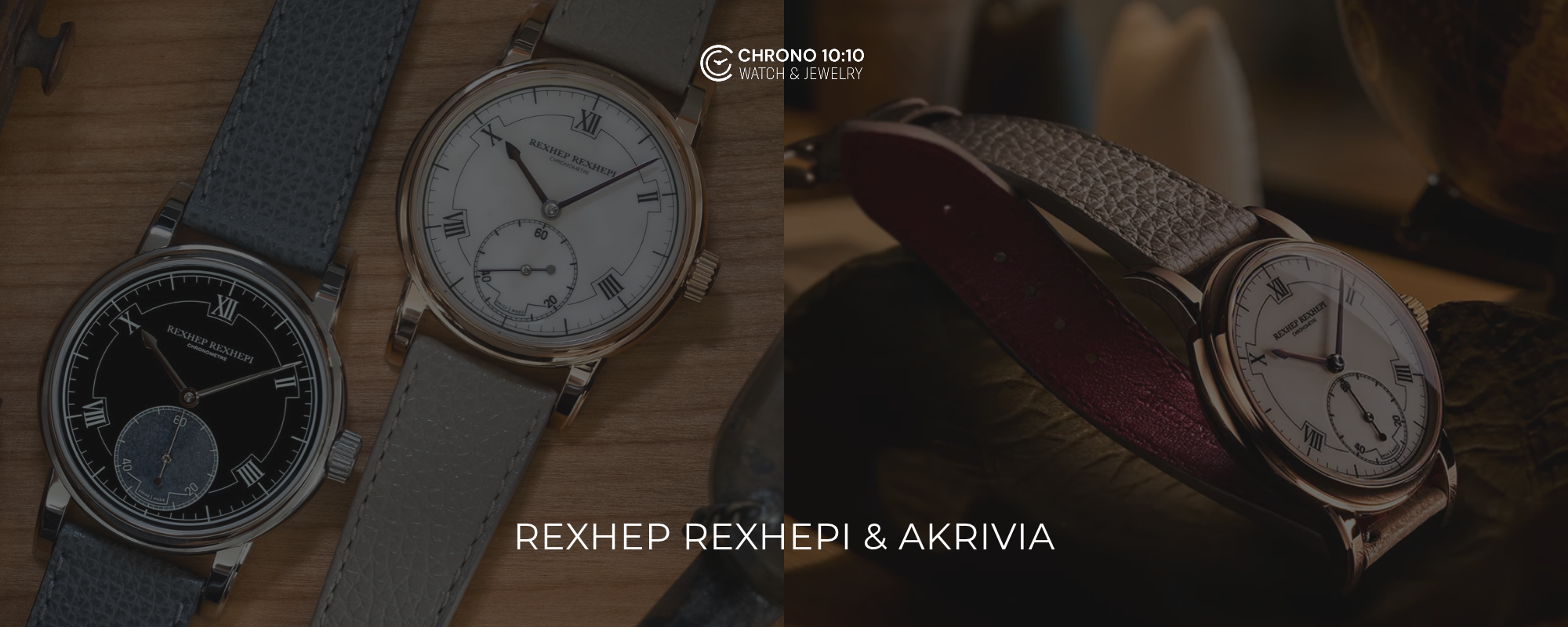
In 2018, Akrivia introduced the Chronomètre Contemporain I (RRCC I), the first landmark model bearing the Rexhep Rexhepi name on the dial. That same year, the watch received the watchmaking Oscar — the Men’s Watch Prize at the Grand Prix d’Horlogerie de Genève. For the young independent watchmaker, this became a major professional recognition.
Overall, it was the Chronomètre Contemporain that demonstrated the defining characteristics of the Rexhep Rexhepi phenomenon:
a move away from the visual flamboyance of early Akrivia models toward a much more restrained aesthetic;
a classic 38 mm case with concave and convex lines in the profile of the case and broad lugs;
a white or black Grand Feu enamel dial created using a technique involving repeated firing at extremely high temperatures;
a small-seconds display that, at first glance, evokes an almost traditional Geneva-school aesthetic;
asymmetrical gold or blue lines on the dial in an Art Deco style, rhythmically dividing or intersecting the Roman numerals;
a leather strap organically integrated into the case.
But beneath this restraint was the RR-01 movement, developed entirely by Akrivia:
manual winding and a 100-hour power reserve;
chronometric precision, a stop-seconds function, and instantaneous reset of the seconds hand to zero;
symmetrically constructed caliber architecture;
a balance spring shaped as a Breguet overcoil;
finishing executed by hand using traditional methods — anglage, black polishing, and Côtes de Genève.
To mark the 10th anniversary of his own brand, Rexhep Rexhepi released the Chronomètre Contemporain II (RRCC II), which won the title of best men’s watch at the 2022 Geneva Grand Prix. The new masterpiece follows the style of the RRCC I but comes in two versions: platinum and rose gold. The differences include a double barrel and an independent jumping seconds mechanism, while its reset system with a cam and hammer is identical to the reset mechanism of a chronograph. The manually wound RRCC II caliber has improved chronometric performance: it uses a newly designed balance wheel with regulating screws instead of circular weights. The case, created by Jean-Pierre Hagmann, consists of 15 parts in a revised form, while the sapphire crystal has become more domed.
Auction Records
Watch auctions have become a kind of indicator of how quickly the market’s attitude toward the Akrivia brand has changed. For example, in 2023, a rose-gold Chronomètre Contemporain I was sold at Phillips Hong Kong for HK$7,24 million (approximately $896,000). The auction result caused a sensation: the watch, originally priced significantly lower, approached a price territory more commonly associated with much more famous Swiss brands.
But just a year later, a leap of an entirely different scale occurred. At Only Watch 2024, the unique Rexhep Rexhepi Chronomètre Antimagnétique, with a steel case and a movement protected from magnetic fields by a Faraday cage, was purchased for CHF 2,1 million (approximately $2,3 million at the time of the sale). This was not merely a success for a young brand — Only Watch became a kind of barometer of how collectors’ perception of the Rexhep Rexhepi name had changed in just a few years.
How to Evaluate Three Only Watch Sales
At the same time, three exceptional models sold at two-year intervals demonstrated a consistent 6,4-fold increase in value:
2019 — RRCC I: $360,932;
2021 — RRCC II: $805,889;
2024 — RRCA: $2,316,695.
These are the results of sales of unique versions created specifically for Only Watch. Each has its own design, movement, and execution, and no second identical example exists. In 2024, Only Watch explicitly described the RRCA as a one-of-a-kind timepiece — the only one of its kind. The watch’s construction is unusual yet characteristic of Akrivia: the case, caseback, and movement ring form a kind of Faraday cage that protects the movement from magnetic influence. The Grand Feu dial also received a scientific interpretation: alternating blocks around the scale resemble the opposite poles of a magnetic field.
However, these three results cannot be regarded as ordinary market dynamics, because Only Watch sells specially created unique watches in a charitable context. Therefore, the final price is influenced not only by the collectible appeal of the work but also by the nature of the auction itself. Nevertheless, this progression remains indicative of the history of Rexhep Rexhepi watches. This is precisely the brand’s phenomenon at Only Watch: not one expensive sale, but three unique works — and each time, a new price level.
The Million Mark Becomes Systematic
In 2024, the Akrivia brand achieved exceptionally strong results at numerous watch auctions. A platinum Chronomètre Contemporain I was sold at Phillips Geneva for CHF 1,16 million. That same year, a titanium Akrivia AK-01 sold for nearly CHF 1,08 million. In other words, the market demonstrated that high prices were not concentrated around a single model — all of Rexhepi’s unique projects began to be perceived as parts of one collectible story.
The next victory came in 2026. At Phillips’ Geneva Watch Auction XXIII, a steel Akrivia AK-06 was sold for CHF 3 million (approximately $3,86 million). Phillips described the result, which was 38 times the original price, as a world record for Akrivia/Rexhep Rexhepi. This is particularly interesting because the AK-06 is not a one-off charity rarity. The model was produced in an extremely small series — 25 examples each in steel and titanium cases.
Rexhep Rexhepi’s Auction Trajectory
The 2026 record demonstrates an entirely different level of collector perception of Akrivia: the market has begun paying millions not only for unique watches but also for rare serial works from the atelier. If the key results are brought together, they form a revealing reverse chronology:
| Model | Price | Date | Auction House |
|---|---|---|---|
| Akrivia AK-06, steel | $3,860,924 | May 2026 | Phillips |
| RRCA Only Watch | $2,316,695 | May 2024 | Christie's |
| RRCC I, platinum | $1,274,985 | May 2024 | Phillips |
| AK-01, titanium | $1,232,830 | November 2024 | Phillips |
| RRCC I 01, rose gold | $896,275 | November 2023 | Phillips |
| RRCC II Only Watch | $805,889 | November 2021 | Christie's |
| AK-05 Barrette-Miroir | $700,541 | May 2024 | Phillips |
| AK-06, unique blue | $679,229 | November 2023 | Christie's |
| AK-01, unique skeleton | $614,541 | November 2023 | Christie's |
| AK-06, grey dial | $549,700 | August 2023 | Hart Davis Hart |
| RRCC I Only Watch | $360,932 | November 2019 | Christie's |
Why Collectors Hunt for Rexhep Rexhepi
Akrivia’s success cannot be explained by rarity alone. In the haute horlogerie market, uniqueness by itself does not guarantee cult status. In the young Kosovar’s brand, several factors came together at once:
Origin. Behind the brand stands a specific watchmaker, Rexhep Rexhepi, rather than a large corporation. You receive the result of the work of a small team that can be directly associated with a particular watchmaker.
Mechanics. Rexhep Rexhepi does not limit himself to decorative finishing. The construction of the movements is part of the aesthetic, while the symmetry of the bridges and the arrangement of components look almost architectural.
Tradition. Grand Feu, anglage, polishing, casework, and dial-making — all of this is done by hand and refers back to Geneva’s historical traditions.
Scale of production. This is not mass production — some models are made in series of only a few dozen examples. For instance, the original Chronomètre Contemporain was limited to 25 pieces.
For collectors, what matters is a rare combination: a young independent brand + historical language + sophisticated mechanics + extremely small production. All of this creates a unique synergy. That is why the waiting list for Akrivia watches already stretches several years into the future, while Rexhepi himself refuses to return to older models even for very large sums of money.
Moreover, Akrivia is an example of how, in the 21st century, it is possible to build a new name practically from scratch that, within just a few years, comes to be perceived as part of haute horlogerie. And perhaps the brand’s rise did not begin with million-dollar auction records at all, but with a simple dream. Its origins lie in the story of a talented boy from Kosovo who came to Geneva, became an apprentice at a renowned manufacture, and eventually created internationally recognized watches engraved with his own name.
Rexhep Rexhepi is an example of how passion and craftsmanship create masterpieces. At Chrono 10:10, we help find watches like these — rare, significant, and rich in history. If you are looking not simply for a watch but for a work of art, we are always ready to help. The market values authentic craftsmanship, and the unique creations of Akrivia have become a vivid example of it.