20 October 2026
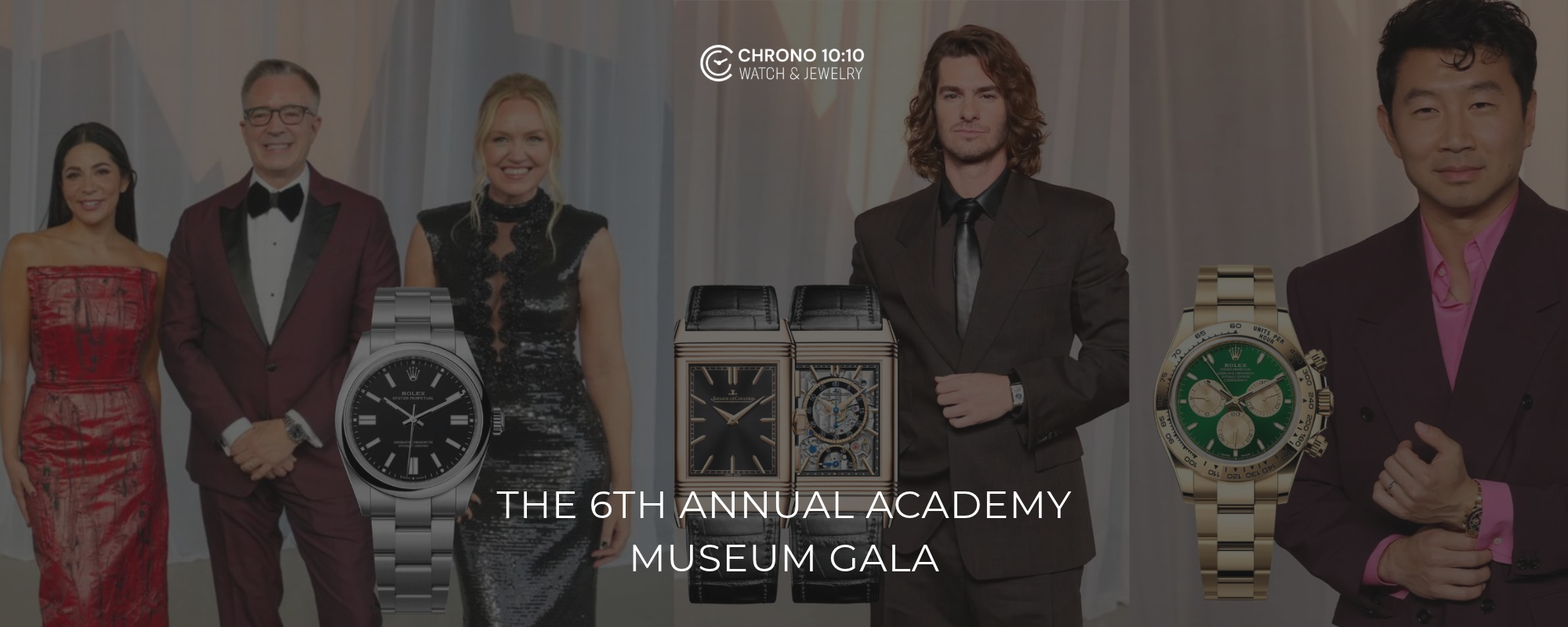
The 6th Annual Academy Museum Gala

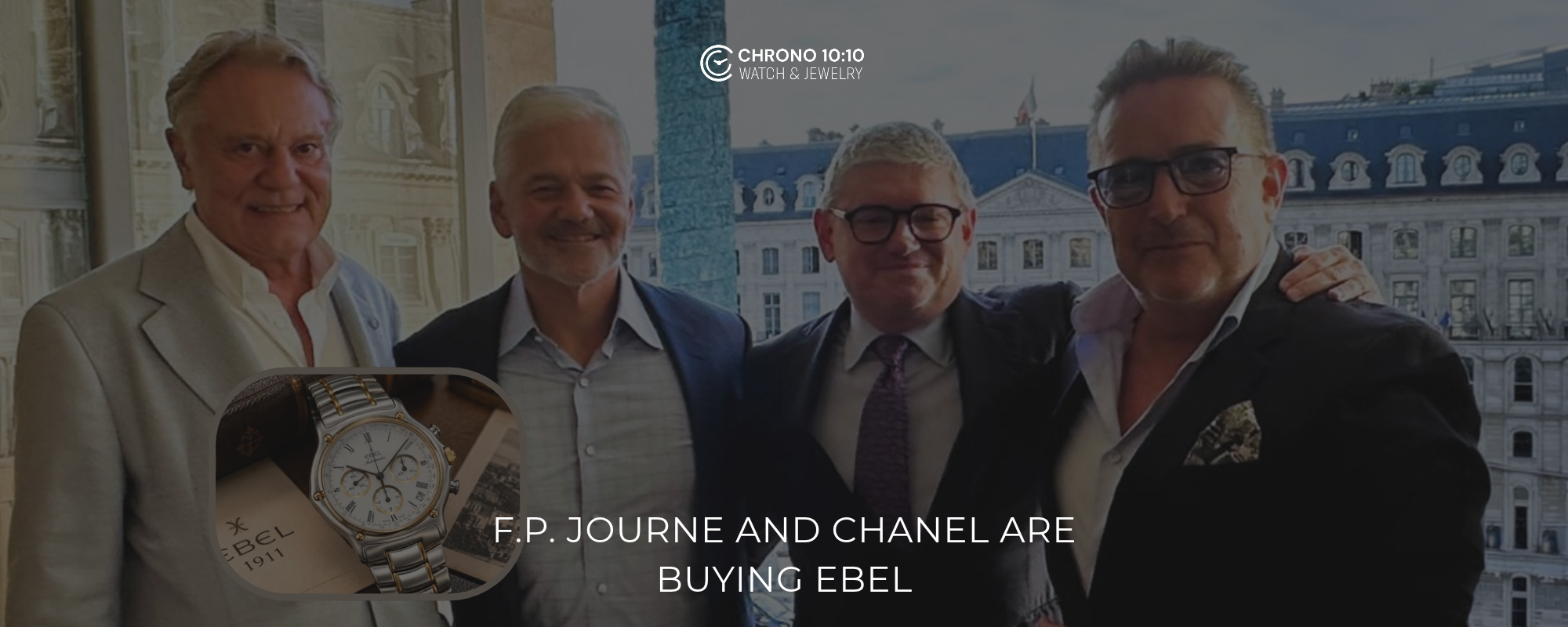
The world of luxury watches is home to many brands that need no introduction, but there are also those that have yet to remind the world of their significance. One such brand is the Swiss watchmaker Ebel, which reached the height of its success in the 1980s and became a prominent symbol of watchmaking elegance. Its watches were more expensive than the Rolex Daytona and were worn by some of the era’s biggest stars. However, by the mid-1990s, changes in the company’s investment priorities under its management had led to the brand’s decline. Several acquisition attempts failed to produce positive results.
Now the brand has new owners capable of changing its future and giving it another chance at success. On October 7, 2026, American holding company Movado Group announced the sale of a 95% stake in Ebel for $66.5 million. The buyer is a consortium led by Montres Journe SA, bringing together the financial resources of the legendary Chanel and the watchmaking expertise of renowned master François-Paul Journe. Pierre Jacques, an experienced executive from luxury watch manufacture De Bethune, is also participating in the transaction. Movado will retain the remaining 5% stake.
What did these masters of haute horlogerie see in Ebel? After all, their own achievements are substantial:
François-Paul Journe is known for watches in which technical ingenuity is inseparable from his distinctive creative signature.
Chanel has consistently strengthened its position in Swiss watchmaking.
Pierre Jacques understands how to manage an independent brand aimed at a discerning audience.
In reality, this is an opportunity to revive a historic name, a promising business, and a rare combination of industrial heritage, recognizable design, and growth potential.
The consortium of buyers is no coincidence. These are professionals who understand what a “product” means in haute horlogerie. As François-Paul Journe stated, “Ebel has always been known for the exceptional quality of its products, and I am delighted to contribute to its next chapter alongside my friends and partners.” The buyers represent three different sides of the market and different perspectives on watchmaking. However, they are united by a growing interest in reviving Swiss luxury watch brands that have fallen into decline.
The watches created by renowned master François-Paul Journe rank among the most sought-after timepieces, while his reputation as a watchmaker rests on sophisticated mechanics, technical innovation, a distinctive design philosophy, and predominantly hand assembly. Founded by him in 1999, F.P. Journe has become one of the most recognizable brands in the watch market. For Ebel, the involvement of Montres Journe is particularly interesting because it offers an opportunity to refocus attention on what ultimately determines the value of a watch: its construction and execution.
The legendary French haute couture house Chanel combines the strength of an international luxury brand with the growing popularity of high-end watches. This has been supported by its experience investing in Swiss watchmaking since 1993. Today, Chanel’s portfolio includes interests in such names in the Haute Horlogerie segment as Kenissi, MB&F, Romain Gauthier, and Bell & Ross, as well as a 20% stake in F.P. Journe held since 2018.
An important part of Chanel’s strategy is its involvement in developing specialized Swiss manufacturing expertise and independent watchmaking companies. In Ebel’s case, Chanel could contribute its experience in working with recognizable design, luxury positioning, and building lasting product value. However, the fashion house’s specific role in Ebel’s future strategy has not yet been disclosed.
The former CEO of independent Swiss luxury watch brand De Bethune, who led the exclusive watchmaking company from 2011 to 2025, plans to become Ebel’s chief executive officer. Under his leadership, De Bethune received the highest distinction, the Aiguille d’Or (“Golden Hand”), at the Grand Prix d’Horlogerie de Genève in 2011. Pierre Jacques’ primary task will be to turn the new owners’ ambitions into a concrete strategy: defining the product lineup, priority markets, and Ebel’s place in the modern watch industry.
The synergistic combination of these investors has an obvious advantage: the participants approach watchmaking from different perspectives:
F.P. Journe is associated with exceptional technical craftsmanship.
Chanel brings expertise in developing luxury brands and manufacturing capabilities.
Pierre Jacques contributes highly professional management of a specialized watchmaking company.
However, famous names alone do not guarantee success, especially considering that Ebel already has its own heritage: recognizable models and a distinctive design identity. The new owners must determine how to combine these with modern mechanics, pricing, and audience expectations without turning the historic brand into a mere extension of someone else’s business.
By purchasing Ebel shares from Movado Group, the new owners did not limit themselves to acquiring the right to manufacture watches under a famous brand name. The transaction includes archives and intellectual property, trademarks, inventory, and a remarkable architectural legacy: Villa Schwob, also known as Villa Turque. This historic building, designed by legendary architect Le Corbusier in 1916–1917 for Anatole Schwob, owner of the Cyma watch company, is closely connected to the brand’s identity.
When Ebel acquired the villa in 1986, the company not only carried out an extensive restoration and gave it a new name, La Maison EBEL, but also incorporated the defining characteristics of architectural modernism into its watchmaking aesthetics. For example, the five screws on the bezel of the anniversary 1911 watches refer to five architectural principles. The design of the Sport Classic collection also echoes the architect’s ideas through flowing lines, an integrated bracelet, and five screws on the bezel. Preserving Villa Turque therefore matters for Ebel’s future as well: it could become a space where the brand tells its story, hosts presentations, and builds relationships with collectors and the horological community.
There is another aspect. Intellectual property, manufacturing archives, and accumulated expertise make it possible to explore Ebel’s heritage in depth, study earlier developments, reconstruct the history of its models, and determine more precisely which elements of that heritage should return in contemporary collections. It can therefore be said that the consortium acquired not only a famous brand but also the source of Ebel’s design philosophy, where “beauty meets function.”
The new watch brand was founded in 1911 in the famous Swiss town of La Chaux-de-Fonds by husband and wife Eugène Blum and Alice Lévy. The brand’s name is an acronym derived from the founders’ initials: E.B. et L. From the beginning, the company developed its own approach to watchmaking, combining technical expertise with expressive design.
Ebel’s true rise came during the 1970s and 1980s. While the Swiss watch industry was experiencing the quartz crisis, the founders’ grandson, Pierre-Alain Blum, who possessed considerable marketing talent, focused on product renewal and manufacturing development, creating the company’s own quartz movements. The brand’s path to success can be outlined through several milestones:
1975 — a contract to manufacture watches for Cartier, specifically the Les Must de Cartier line.
1977 — the launch of the Sport Classic model, featuring five screws on the bezel and an iconic integrated wave-shaped bracelet. It defined the appearance of the brand’s watches and successfully responded to the demands of the time: the watches looked prestigious enough for business attire while retaining a sporty character.
1982 — the introduction of an automatic chronograph based on Zenith’s El Primero caliber, marking an important milestone in Ebel’s history. This happened six years before Rolex used the movement in the Daytona.
Overall, the brand demonstrated that its elegant appearance was supported by serious technical solutions. Ebel subsequently continued developing complicated mechanical watches, including perpetual calendar models.
Ebel’s popularity increased dramatically after Don Johnson, the lead actor in the television series Miami Vice, appeared wearing a 1911 chronograph. At the time, Ebel knew how to work with the cultural landscape: sports sponsorships, international celebrities, and advertising campaigns made the brand famous far beyond the narrow circle of watch enthusiasts. Ebel sponsored tennis tournaments and stars such as Agassi, Noah, and Becker, as well as Harrison Ford and Madonna.
However, the brand gradually lost the popularity it had enjoyed during its golden years. This resulted from several developments:
1994 — Ebel was sold to Investcorp, a major international investment company specializing in alternative asset management.
1999 — the brand became part of the portfolio of LVMH, the French multinational luxury goods conglomerate.
2004 — Ebel was acquired by American watch group Movado Group, which develops, manufactures, markets, and distributes wristwatches and accessories worldwide.
Changes in ownership did not mean the brand disappeared. Ebel continued producing watches, updating collections, and returning to its traditional design principles. Although the brand remained recognizable to many Swiss watch enthusiasts, it had almost disappeared from discussions of the most influential contemporary manufacturers. This is precisely why the current transaction is so intriguing: the new owners are not acquiring an empty shell that needs to be filled with substance, but a brand with tangible achievements, an outstanding history of watch models, and a character of its own.
The central question is what the new Ebel might become. The brand has everything necessary to attract attention once again: history, recognizable design, architectural heritage, and experience in mechanical watchmaking. But there is still a considerable distance between possessing these assets and achieving a genuine revival. Several development scenarios are therefore possible.
The most obvious approach is to reinterpret the legendary Sport Classic and 1911 collections, which retain their characteristic proportions, recognizable bracelets, and elegant sporting aesthetics. This does not mean copying models from the past. On the contrary, a successful update would involve modern movements, improved finishing, and execution quality consistent with the stated price.
The involvement of F.P. Journe in the investor consortium inevitably raises questions about movements. Could Ebel return to more independent technical development? At present, there are no grounds to claim that the brand will receive its own manufacture caliber lineup. Various solutions are possible: using proven Swiss movements, extensively modifying third-party calibers, or gradually developing in-house technical expertise. It is important not to confuse F.P. Journe’s reputation with a guarantee that its technology will be transferred to another brand. In reality, F.P. Journe timepieces and Ebel watches may develop in entirely different directions and price categories.
This is a risky scenario in which a return to luxury positioning could be accompanied by higher watch prices. However, a high price alone does not create collectible value. If the new Ebel relies primarily on its name, archival references, and the status of its owners without offering corresponding quality, audience interest may prove short-lived. For sustainable success, the brand needs to find a balance between historical recognition, modern technical capabilities, and a realistic pricing strategy.
At the same time, statements from those involved in the transaction speak for themselves:
François-Paul Journe: “Product, product, product. Ebel has always been associated with an exceptional product.”
Frédéric Grangié (Chanel): “Ebel is one of the great names in Swiss watchmaking, with a rich heritage and a strong foundation for future growth.”
Pierre Jacques: “I am incredibly proud and excited to have the opportunity to lead this new chapter for Ebel.”
This is a genuine indication that Ebel’s heritage deserves a second chance, particularly considering that Chanel generally invests in independent brands with strong reputations (F.P. Journe, MB&F, Romain Gauthier). Together with F.P. Journe, it could revive Ebel and establish a new strategy for restoring historic Swiss watch brands within the watch market.
For collectors and investors, this is perhaps the key question: could a change of ownership lead to a revaluation of vintage Ebel models? At the time the transaction was announced, the market was not showing an obvious price surge that could be attributed to the news. However, publicly available sales information, for example on Chrono24, does not constitute a comprehensive Ebel price index and does not prove that the announcement has had no impact across all segments:
Sport Classic, steel and gold — €480–790.
Sport Classic, reference 1087121 — approximately $400–1100.
Wave — €800–2500, depending on condition and included accessories.
Vintage 1911 El Primero and 1911 Chronograph — €2450.
The database of EveryWatch, a global online platform for monitoring and analyzing the international luxury and vintage watch market, contains results from 2025–2026 in approximately the same price range. At the same time, the data shows that many popular Ebel models remain available at relatively moderate prices. According to experts, this is due to several factors:
Ebel produced watches for a broad audience of affluent buyers rather than exclusively in small series for a narrow circle of collectors.
Not all models have the same historical or technical value.
Availability on the secondary market does not guarantee liquidity: supply may be substantial, while the number of buyers interested in a particular reference may be limited.
Nevertheless, experts believe that certain models have characteristics that could attract closer attention:
First-generation Sport Classic watches, distinguished by the design most closely associated with Ebel. Examples with well-preserved cases and bracelets are particularly interesting.
Chronographs based on the El Primero movement, which enrich the brand’s history through their association with an iconic automatic caliber.
Complicated mechanical models. Perpetual calendar chronographs and other technically interesting watches deserve careful examination, particularly considering the condition and provenance of individual examples.
However, according to professionals, buying watches before the appearance of new collections, information about movements, and the first signs of sustainable demand would be premature. The specialists at our Chrono 10:10 boutique believe it is important to consider not only price but also confirmed sales of the same reference over time, the number of available examples, listing duration, watch condition, and servicing costs. The latter is particularly important for vintage models: an inexpensive purchase may require substantial restoration expenses.
While the transaction is still being prepared for signing, much remains unknown. However, several developments will help determine how serious the new owners’ intentions are:
The first collection. Will Sport Classic return to the spotlight, and will the 1911 line be updated? The actual models will reveal how the team interprets Ebel’s heritage.
Movements. Will the emphasis remain on proven third-party calibers, or will more advanced technical developments emerge? The answer will help establish the level of watchmaking the brand intends to pursue.
Pricing strategy. Can Ebel find its place between mass-market Swiss watches and expensive independent manufacturers? A sudden move into a higher price segment will require convincing justification.
Retail network and service. The brand’s return depends not only on presentations but also on watch availability through dealers, accessible servicing, and support for owners.
Secondary-market reaction. More important than a temporary surge of attention will be a sustained increase in actual transactions, narrowing discounts, and stable demand for specific references.
Villa Turque represents a separate symbolic element. If the historic building once again becomes the center of Ebel’s activities, the brand will have an opportunity to bring architecture, tradition, and contemporary watchmaking together into a single narrative. But here, too, the decisive factor will not be the mere preservation of heritage, but how that heritage contributes to the product.
The transaction is also interesting for the market because it demonstrates an alternative path for developing a watch brand: creating a new name from scratch is not always necessary when an existing one can be made relevant again. However, heritage is starting capital, not a guarantee of success. Ultimately, the most interesting aspect of this story is not how much vintage Ebel watches are worth today, but whether the new Ebel can create masterpieces that will be truly desirable tomorrow. If you are looking for watches with heritage or want to understand what is happening in the market for independent and historic brands, the experts at Chrono 10:10 will help you navigate it.

15 years on the market

Own service center

2 years of official warranty

Verified authenticity